Become a sculptor for a day!

Part of Void Explorers


Void Explorers is a programme of bookable workshops in Void Gallery aimed at children and young people aged 4-14 years old.


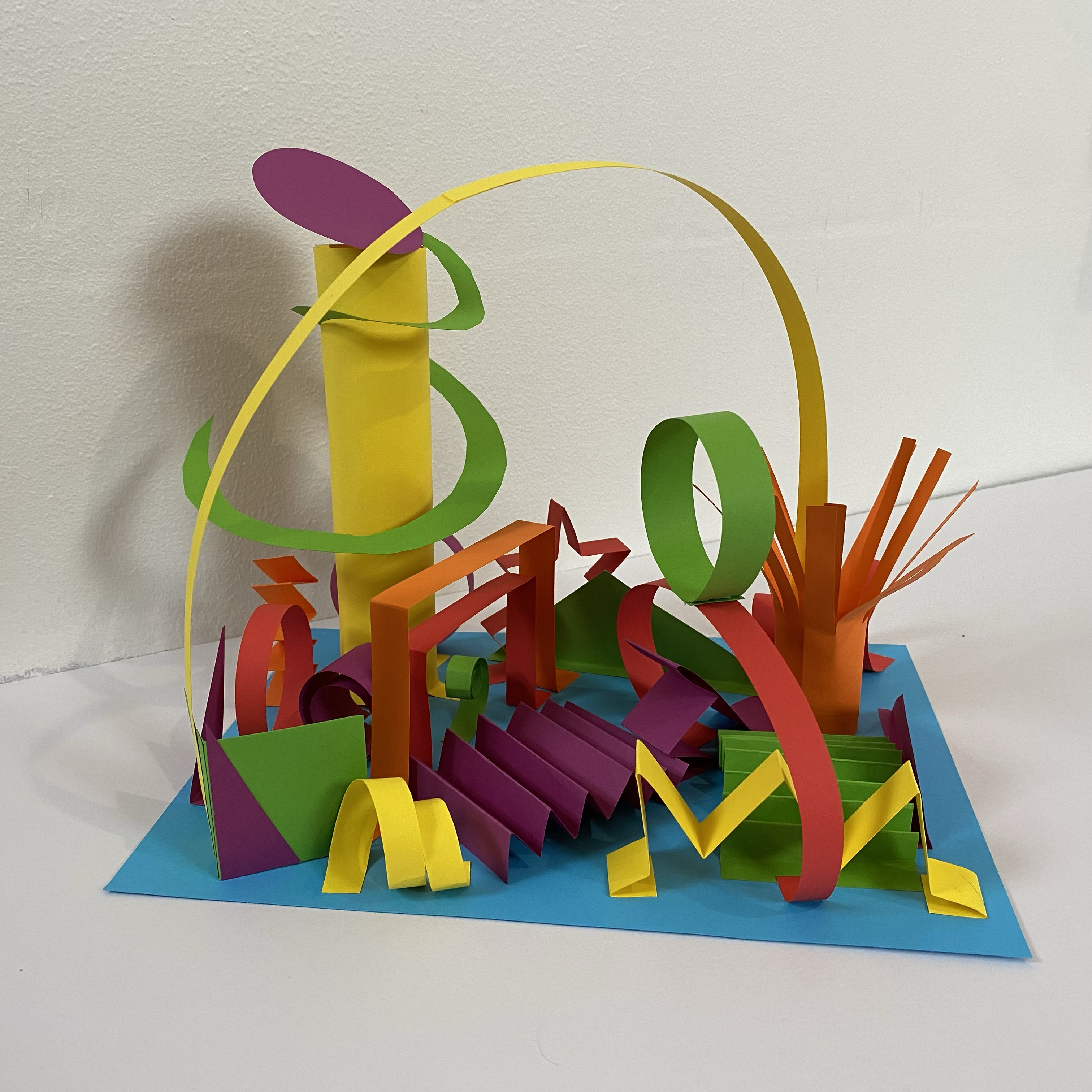
Become a sculptor for the day by expanding the gestures in Isabel Nolan’s 2D artworks using coloured paper to create your own 3D artworks!


Book here!


Session 1: Ages 4-7

10-11am


Session 2: Ages 8-11

11:30am-12:30 midday


Acknowledgments


Void Gallery is supported using public funding from Arts Council Northern Ireland, Austin and Hope Pilkington Foundation, Arnold Clarke Foundation, Derry City and Strabane District Council, The Ireland Funds, Ragdoll Foundation, Art Fund, Halifax Foundation, The Arts Society.


Isabel Nolan logo strip

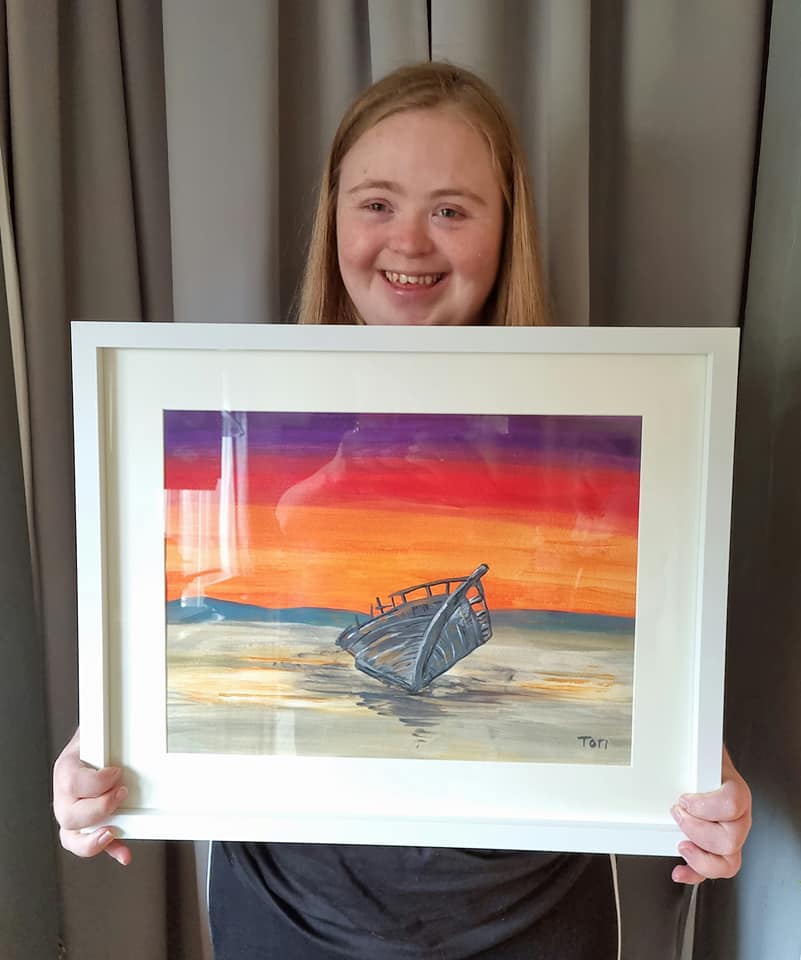
Teenage girl holds up brightly coloured painting depicting a whale's fin entering the water at sunset.

Sunset painting demonstration and workshop with Tori McNeill

Book here!


Aimed at ages 10-14


Part of our Void Explorers programme of bookable workshops aimed at children and young people aged 4-14 years old.

Join Tori McNeill on Saturday 3rd December from 2-3pm for a sunset painting demonstration and workshop. During this session participants will have the opportunity to work alongside Tori to create their own canvas sunset masterpiece to take home!


Tori McNeill is a 23 year old artist based in Derry whose work focuses on the use of bright colours and strong bold shapes. Tori has exhibited throughout Derry over the last couple of years and has facilitated workshops with a number of different groups. She was born with Down syndrome and diagnosed with Autism when she was 18 (the same week as her first exhibition!) – Tori’s Autism has aided her art and helped her develop her unique style, seeing the world through a spectrum of colours. She is very keen to inspire other people with disabilities not to be held back by them but to move forward, be positive and reach for their dreams.


Presented as part of Disability Awareness Week 2022.


Acknowledgements


Image courtesy of Tori McNeill.


Void Gallery is supported using public funding from Arts Council Northern Ireland, Austin and Hope Pilkington Foundation, Arnold Clarke Foundation, Derry City and Strabane District Council, The Ireland Funds, Ragdoll Foundation, Art Fund, Halifax Foundation, The Arts Society.


Isabel Nolan logo strip

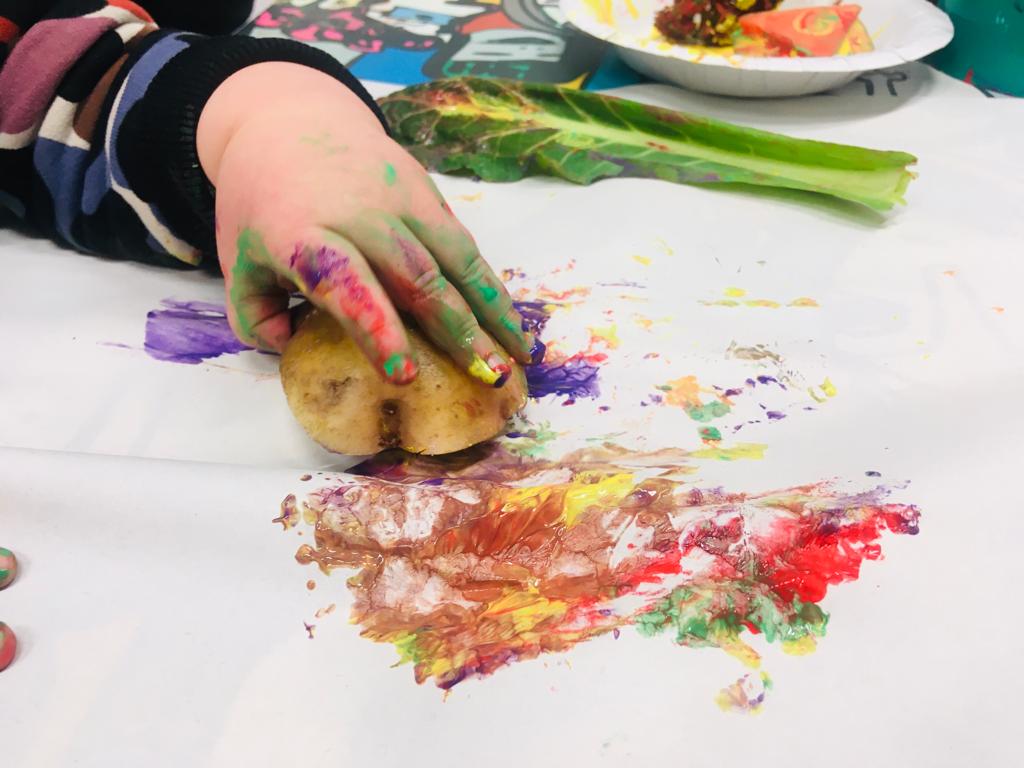
a child's hand soiled with colors holds a sponge on a colored sheet

Void Tots

Void Tots are relaxed and fun messy play sessions with artist Sinead Crumlish for children aged 1-3 years old.

Upcoming sessions include:

Saturday 10th December 10:30-11:15am & 11:30am-12:15pm
Friday 13th January 10:30 & 11:30am
Saturday 11th February 10:30 & 11:30am

Book a spot via the link here to come along and get messy with your little ones!


Please note that, due to space restrictions, one parent per child is advised. Parents or guardians are welcome to take other children along but they will be asked to remain seated in the gallery foyer or they can visit the exhibition.

Painting

Isabel Nolan – flotsam, jetsam, lagan and derelict

Void Gallery is delighted to present flotsam, jetsam, lagan and derelict, a solo exhibition by Dublin-based artist Isabel Nolan. The exhibition comprises paintings, drawings and objects, reflecting Nolan’s ongoing interest in modes of human organisation, the shifting status of artefacts and images over long periods of time.


The preview will commence with an in conversation between Isabel and Declan Long, art critic and Course Director of the MA Art in the Contemporary World at NCAD Ireland. Booking can be made by visiting this link.


The experience of lockdown during Covid-19 and the slowing down of time has a resonance in this exhibition. Often working at home, drawing, an important element of Nolan’s practice, became the sole conduit of how she made ‘meaning’ happen and manifested a response in a time of huge uncertainty.Drawing is integral to her studio practice, it is a means to conjure new representations of the world, of making it legible. Sketching, scribbling, note-taking, erasing and sometimes simply expending nervous energy is fundamental to the way Nolan draws. Often made without the intention of being exhibited, pages absorb ideas and begin to suggest material ways to formulate and give shape to often abstract ideas. The line, colours, patterns and forms are a starting point for her expanded practice; from there she transfers this mode of working to encompass painting, sculpture or tapestry.


The paintings have an ethereal and otherworldly quality stemming from years of reading and harvesting ideas from diverse fields; philosophy, archaeology, physics and theology. The figures in the paintings, such as shadowy St. Jerome, the patron saint of archaeology, known for his translation of the bible, and St. Columba, the patron Saint of Derry, who is credited with spreading monastic Christianity Christian culture in Ireland, and Scotland (and overseeing the emergence of an Irish historical record,) reflects Nolan’s love for elaborately honed narratives that become the channel for disseminating both troubling beliefs and great spirituality.


The paintings have an energetic quality to them, a hum, a liveness through her use of colour and motifs that recur throughout her work; suns, spirals, and waveforms give this sense of momentum. These forms also express the macro and the micro, the cosmic to the cellular.


Her works are revealing; representing the unseen, a fluid version of the world that continues to explore the periphery, the otherworld, and questions of ‘meaning’. As we have returned to the everyday, and things are as they were, and we are overloaded with quotidian concerns, those philosophical questions concerning the nature of the human condition have receded. This exhibition is a reminder that existence is delicate, unfathomable and our vocabulary often struggles to encapsulate the profundity and strangeness of being alive. In a time where the world feels as if it is teetering on a precipice of cumulative disasters Nolan provides a provisional space for us to occupy and ruminate on the nature and beauty of existence.


Isabel Nolan Biography


Isabel Nolan’s work includes sculpture, textiles, paintings, drawings, photography and writing. Her work responds to the fundamental question of how humans bring the world into meaning. How we make, (through science, politics, agriculture, religion, etcetera), reality happens. Whether examining the knees of a 17th C sculpture, perceptions of a Neolithic artefact, the shifting symbolic status of a donkey or images of distant galaxies, Nolan looks for the ways we can like, or even love, the difficult and complex human world we’ve made.


“The arc of almost every little thing I’ve proffered in public, in exhibitions or texts is quite similar. It goes as follows: Life is often hard and without meaning in any grand, a priori sense. Art is a good way to find meaninglessness beautiful. Meaning must be invented. And those inventions must be contested and questioned, and never taken for granted.” Isabel Nolan


Curling up with Reality, 2020, is a monograph featuring select work and writing from 2011 to 2020, published by Launchpad, London; Kerlin Gallery, Dublin, in association with DHG, Dublin. Recent exhibitions include A delicate bond that is also a gap, Solstice Arts Centre, Navan, 2021; Spaced Out, Kerlin Gallery, Dublin, 2021; a two-person show (with Stephen McKenna), Boxes Art Museum, Shunde, China, 2019, and solos at Kunstverein Langenhagen, 2018; Grazer Kunstverein, 2017-18; Douglas Hyde Gallery, Dublin, 2017; London Mithraeum/Bloomberg Space, 2017; Mercer Union, Toronto, 2016; Irish Museum of Modern Art, 2014. Isabel Nolan represented Ireland at the 2005 Venice Biennale in a group exhibition. Her work has featured in EVA International, Limerick; LIAF biennial, Norway; Artspace, Sydney; Palais de Tokyo, Paris; Beijing Art Museum, and Glasgow International.


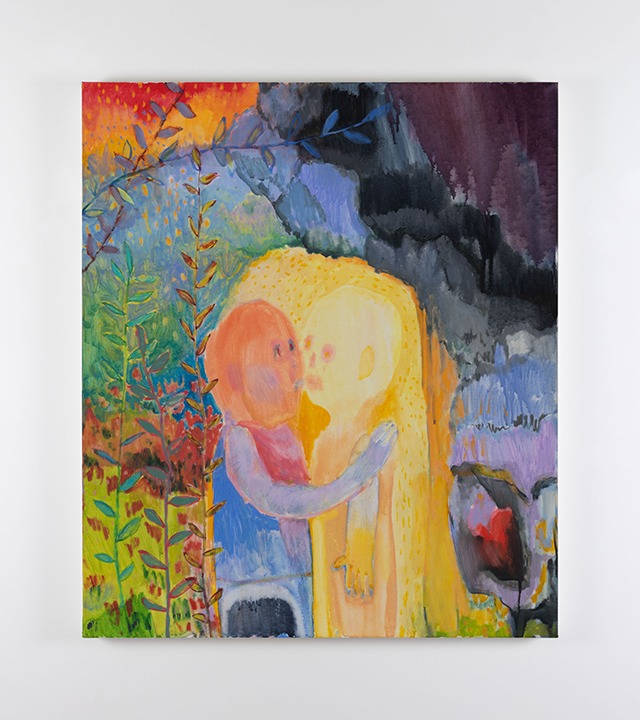
Image credit: Eurydice (dead again…) and Orpheus, 2022 water-based oil on canvas, 70 x 60 cm / 27.6 x 23.6 in


Acknowledgements


Void Gallery is supported using public funding from Arts Council Northern Ireland, Austin and Hope Pilkington Foundation, Arnold Clarke Foundation, Derry City and Strabane District Council, The Ireland Funds, Ragdoll Foundation, Art Fund, Halifax Foundation, The Arts Society.


Isabel Nolan in conversation with Declan Long

On Saturday 19 November at 5:30pm, join us for a special in conversation at Void, between artist Isabel Nolan and art critic Declan Long, in response to Isabel’s solo exhibition flotsam, jetsam, lagan and derelict. The exhibition will open to the public at 6pm and drinks will be served, provided by Northbound Brewery.

This is a FREE event but booking is advised.

About the exhibition


flotsam, jetsam, lagan and derelict is a solo exhibition by Dublin-based artist Isabel Nolan. The exhibition comprises paintings, drawings and objects, reflecting Nolan’s ongoing interest in modes of human organisation, the shifting status of artefacts and images over long periods of time.

The experience of lockdown during Covid-19 and the slowing down of time has a resonance in this exhibition. Often working at home, drawing, an important element of Nolan’s practice, became the sole conduit of how she made ‘meaning’ happen and manifested a response in a time of huge uncertainty.Drawing is integral to her studio practice, it is a means to conjure new representations of the world, of making it legible. Sketching, scribbling, note-taking, erasing and sometimes simply expending nervous energy is fundamental to the way Nolan draws. Often made without the intention of being exhibited, pages absorb ideas and begin to suggest material ways to formulate and give shape to often abstract ideas. The line, colours, patterns and forms are a starting point for her expanded practice; from there she transfers this mode of working to encompass painting, sculpture or tapestry.

The paintings have an ethereal and otherworldly quality stemming from years of reading and harvesting ideas from diverse fields; philosophy, archaeology, physics and theology. The figures in the paintings, such as shadowy St. Jerome, the patron saint of archaeology, known for his translation of the bible, and St. Columba, the patron Saint of Derry, who is credited with spreading monastic Christianity Christian culture in Ireland, and Scotland (and overseeing the emergence of an Irish historical record,) reflects Nolan’s love for elaborately honed narratives that become the channel for disseminating both troubling beliefs and great spirituality.

The paintings have an energetic quality to them, a hum, a liveness through her use of colour and motifs that recur throughout her work; suns, spirals, and waveforms give this sense of momentum. These forms also express the macro and the micro, the cosmic to the cellular.

Her works are revealing; representing the unseen, a fluid version of the world that continues to explore the periphery, the otherworld, and questions of ‘meaning’. As we have returned to the everyday, and things are as they were, and we are overloaded with quotidian concerns, those philosophical questions concerning the nature of the human condition have receded. This exhibition is a reminder that existence is delicate, unfathomable and our vocabulary often struggles to encapsulate the profundity and strangeness of being alive. In a time where the world feels as if it is teetering on a precipice of cumulative disasters Nolan provides a provisional space for us to occupy and ruminate on the nature and beauty of existence.

Isabel Nolan Biography


Isabel Nolan’s work includes sculpture, textiles, paintings, drawings, photography and writing. Her work responds to the fundamental question of how humans bring the world into meaning. How we make, (through science, politics, agriculture, religion, etcetera), reality happens. Whether examining the knees of a 17th C sculpture, perceptions of a Neolithic artefact, the shifting symbolic status of a donkey or images of distant galaxies, Nolan looks for the ways we can like, or even love, the difficult and complex human world we’ve made.

“The arc of almost every little thing I’ve proffered in public, in exhibitions or texts is quite similar. It goes as follows: Life is often hard and without meaning in any grand, a priori sense. Art is a good way to find meaninglessness beautiful. Meaning must be invented. And those inventions must be contested and questioned, and never taken for granted.” Isabel Nolan

Curling up with Reality, 2020, is a monograph featuring select work and writing from 2011 to 2020, published by Launchpad, London; Kerlin Gallery, Dublin, in association with DHG, Dublin. Recent exhibitions include A delicate bond that is also a gap, Solstice Arts Centre, Navan, 2021; Spaced Out Kerlin Gallery, Dublin, 2021; a two-person show (with Stephen McKenna), Boxes Art Museum, Shunde, China, 2019, and solos at Kunstverein Langenhagen, 2018; Grazer Kunstverein, 2017-18; Douglas Hyde Gallery, Dublin, 2017; London Mithraeum/Bloomberg Space, 2017; Mercer Union, Toronto, 2016; Irish Museum of Modern Art, 2014. Isabel Nolan represented Ireland at the 2005 Venice Biennale in a group exhibition. Her work has featured in EVA International, Limerick; LIAF biennial, Norway; Artspace, Sydney; Palais de Tokyo, Paris; Beijing Art Museum, and Glasgow International.

Declan Long Biography


Declan Long is a lecturer at the National College of Art & Design in Dublin, Ireland, where he is Course Director (with Francis Halsall) of the MA Art in the Contemporary World, a theory-practice postgraduate contemporary art programme for critics, curators and artists (www.acw.ie). He is a regular contributor to Artforum and Source Photographic Review.

His book Ghost-haunted Land: Contemporary Art and Post-Troubles Northern Ireland, is available from Manchester University Press.

Acknowledgements


Void Gallery is supported using public funding from Arts Council Northern Ireland, Austin and Hope Pilkington Foundation, Arnold Clarke Foundation, Derry City and Strabane District Council, The Ireland Funds, Ragdoll Foundation, Art Fund, Halifax Foundation, The Arts Society.

frame of a straight road surrounded by grass

Preview: Being in a Place: A Portrait of Margaret Tait, an exhibition by Luke Fowler

Saturday 10 September, 6:30-8pm


You are invited to join us for the première of Glaswegian artist Luke Fowler’s short feature film Being in a Place – A Portrait of Margaret Tait, featuring the work of filmmaker-poet, the late Margaret Tait. Drawing on a wealth of unseen archival material and unpublished notebooks, the film weaves a complex and personal portrait of Margaret’s life, from the perspective of a fellow artist sensitive to the potential Margaret envisaged for film as a poetic medium.


The opening will run from 6:30-8pm with a special in conversation between Void Director Mary Cremin and artist Luke Fowler at 5:30pm on the same evening. This event is free to the public but booking is advised – you can register to attend here.


Refreshments will be provided – with drinks sponsored by Northbound Brewery.


Acknowledgements


Image credit: 43mins A967 disused airfield road


This exhibition is presented in collaboration with Creative Scotland, Donald Porteous, LUX Scotland, the Margaret Tait Estate, The Modern Institute, Sarah Neely, Orkney Library & Archive, and Pier Arts Centre.


Void Gallery is supported using public funding from Arts Council Northern Ireland, Austin and Hope Pilkington Foundation, Arnold Clarke Foundation, Derry City and Strabane District Council, The Ireland Funds, Ragdoll Foundation, Art Fund, Halifax Foundation, The Arts Society.


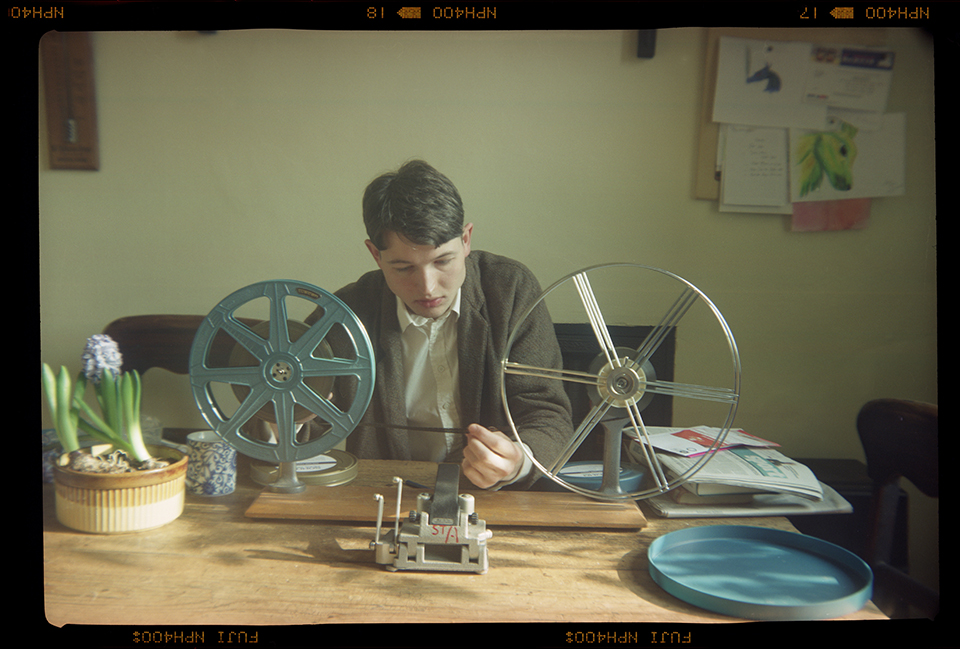
frame of a boy using a technical tool with two wheels on a table

In conversation: Luke Fowler & Mary Cremin

Join us on Saturday 10th September from 5:30-6:30pm as Void Director Mary Cremin is joined in conversation by Luke Fowler to discuss his solo exhibition Being in a Place: A Portrait of Margaret Tait. The exhibition opens to the public from 6:30-8pm on the same evening. Drinks are provided by Northbound Brewery.


This event is FREE but booking is advised.


~~~


Void is delighted to present the première of Glaswegian artist Luke Fowler’s short feature film Being in a Place – A Portrait of Margaret Tait, featuring the work of filmmaker-poet, the late Margaret Tait. Drawing on a wealth of unseen archival material and unpublished notebooks, the film weaves a complex and personal portrait of Margaret’s life, from the perspective of a fellow artist sensitive to the potential Margaret envisaged for film as a poetic medium.


At the centre of the film is an imagining of an unrealised script for a feature film discovered amongst Margaret’s documents in Orkney titled Heartlandscape: Being in a Place. Heartlandscape was originally written by Tait in 1986 but never got beyond the proposal stage. The proposal describes several sections and films – including Garden Pieces which was realised and became Tait’s final 16mm film. At the heart of Tait’s proposal is the description of a landscape, and a journey through it – covering a terrain of moorland and hillside that Margaret knew intimately as her daily drive; from her home in Aith – to her work at Orquil Studio, in Rendall. The journey encompasses views over Rousay and other Orkney isles and beyond it to the Atlantic ocean and Hoy but it was the diversity of the terrain that fascinated Margaret; covering everything from peaty wilderness areas, to pre-historic dwellings and signs of modernity – including TV towers and experimental wind-turbines.


Although Margaret’s films have been acknowledged recently as pioneering and ahead of their time – she lived a largely isolated life in Orkney. Her body of work – some thirty-two short films and one feature film were for the most part self-funded and self-distributed, and, compared to the work of her male counterparts, often dismissed or ignored for appearing too “amateur-ish”.


This film sets about to offer a new reading of Tait’s life and work based on her own notebooks, film scripts, recordings, correspondence and portraits of people that she filmed. The exhibition provides an opportunity to discover the works of Margaret Tait through archival material that demonstrates her multifaceted practice through her drawings, assemblages, poetry and films. Fowler’s film draws on the landscape and the terrain that was so significant in her work and creates a unique portrait of one of Scotland’s most significant, and proudly independent, filmmakers.


Luke Fowler Biography


Luke Fowler (Glasgow, 1978) is an artist, filmmaker and musician based in Glasgow. He studied printmaking at Duncan of Jordanstone College of Art and Design. His work explores the limits and conventions of biographical and documentary filmmaking, and has often been compared to the British Free Cinema of the 1950s. Working with archival footage, photography and sound, Fowler’s filmic montages create complex portraits of counter-culture and other marginalised figures. Fowler was awarded the inaugural Derek Jarman Award in 2008 and was shortlisted for the Turner Prize in 2012 for his first feature film All Divided Selves. In 2019 he won Best Short film at both Glasgow Short Film Festival and Punto De Visto international documentary festival, Pamplona, for his film Mum’s Cards.


Margaret Tait Biography


Margaret Tait was one of Scotland’s most important female independent filmmakers; she died in her home town of Orkney in 1999 at the age 80. 2019 marked her centenary with a series of exhibitions and events taking place worldwide to broaden the distribution and appreciation of her work (MT100). Tait made one feature film in her life (Blue Black Permanent, 1992) but was best known for her short 16mm poem-films (or film-poems). It’s not surprising that she also wrote and published poetry and short stories (publishing two volumes in her lifetime). After studying with Roberto Rossellini at the Centro Sperimentale film school in Rome (1950-52) she based herself in Edinburgh where she ran the Rose Street festival – rubbing shoulders with the likes of John Grierson, Hugh MacDiarmid, Sorley Maclean and Norman MacCaig. She returned to her birthplace of Kirkwall, Orkney in the late 60’s – which became the landscape and subject of the majority of her following films until her passing.


Acknowledgements


Image credit: 43mins A967 disused airfield road


This exhibition is presented in collaboration with Creative Scotland, Donald Porteous, LUX Scotland, the Margaret Tait Estate, The Modern Institute, Sarah Neely, Orkney Library & Archive, and Pier Arts Centre.


Void Gallery is supported using public funding from Arts Council Northern Ireland, Austin and Hope Pilkington Foundation, Arnold Clarke Foundation, Derry City and Strabane District Council, The Ireland Funds, Ragdoll Foundation, Art Fund, Halifax Foundation, The Arts Society.

ads

Official opening of RFR Residency

Next Tuesday from 6:30-8:30pm, join us for the official opening of Rewind Fastforward Record’s installation at Void Gallery, an exhibition exploring the rich history of Foyle Pride. Drinks will be provided by Northbound Brewery.


No booking required – just drop in!


The REWIND << FASTFORWARD >> RECORD (RFR) initiative is aimed at engaging with LGBTQ+ community groups on a national platform to uncover queer histories and expand their retelling and relevance through artistic interpretation.
As part of each regional exhibition, a further series of local talks and workshops will generate new creative responses expanding the material as it tours to each location. This cumulative material will form both a historical and a contemporary archive of hidden queer histories and current perspectives of RFR participants. RFR is an exploration of queer identity; past and present, and aims to connect us with both our history and our community.


RFR conducted research and ran a number of workshops and events as part of their four-week residency at Void Gallery, responding to the unofficial Foyle Pride Archive and Derry’s queer history. This installation is a culmination of this work.
By better understanding our past, we can ensure a more visible and equal future.


Acknowledgements


Presented in conjunction with Rewind Fastforward Record and the Museum of Everyone.


Void Gallery is supported by Arts Council Northern Ireland, Derry City and Strabane District Council, Halifax Foundation, The Ragdoll Foundation, The Ireland Funds, Austin and Hope Pilkington Foundation, and Arnold Clarke Foundation.
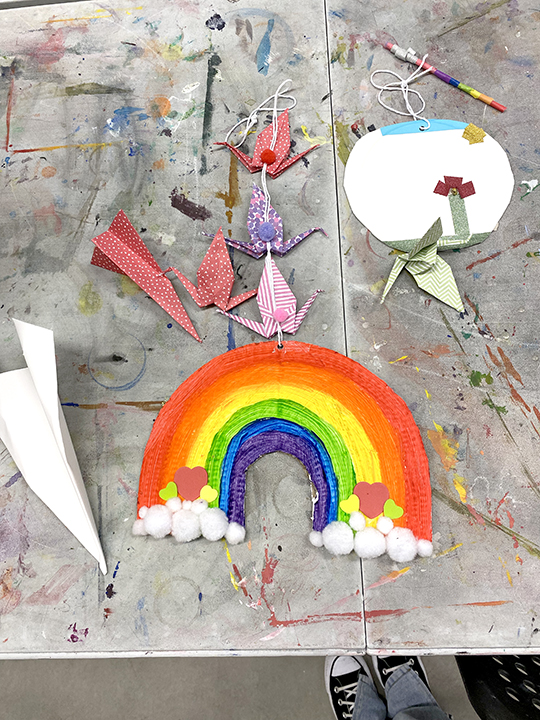
handmade work by a child with a rainbow and card, is on a wooden table

Family drop in day with artist Zoe McSparron

20 August, 12 – 4pm

The family drop in day is coming over all Pride to celebrate the Foyle Pride Festival on the 28th August! Join artist Zoe McSparron in Pride inspired activities and create something special to bring along to Foyle Pride!


Acknowledgements


Void Gallery is supported using public funding from Arts Council Northern Ireland, Austin and Hope Pilkington Foundation, Arnold Clarke Foundation, Derry City and Strabane District Council, The Ireland Funds, Ragdoll Foundation, Art Fund, Halifax Foundation, The Arts Society.

two little girls listen to music while drawing sitting

Culture Night for All – at Void Gallery

Join us at Void on Culture Night 2022 from 6-8pm for a family drop-in workshop inspired by Luke Fowler’s exhibition, Being in a Place – A Portrait of Margaret Tait, led by artists, Zoe McSparron and Anna Barclay.


The entire gallery will be transformed, with the gallery floor becoming a giant collaborative sketchpad for everyone to explore the exhibition through drawing exercises, and Void’s education space becoming a creative eco-laboratory where you can conduct experiments, making your own natural inks and paint brushes! Personal drawing boards will also be available for participants to conduct independent drawing experiments. These activities will encourage us to explore the exhibition through various different mediums as we think about relevant themes, sounds and memories.


Acknowledgements


Void Gallery is supported using public funding from Arts Council Northern Ireland, Austin and Hope Pilkington Foundation, Arnold Clarke Foundation, Derry City and Strabane District Council, The Ireland Funds, Ragdoll Foundation, Art Fund, Halifax Foundation, The Arts Society.


Image credit: Lorcan Doherty

a logo

RFR Workshops and events – Foyle Pride

The REWIND<<FASTFORWARD>>RECORD (RFR) initiative is hitting Derry with an exciting programme of events aimed at exploring the rich history of Foyle Pride and LGBTQ+ activism in the city.

Coordinated by artist and curator Brendan Fox and GCN’s editorial assistant Han Tiernan, the RFR initiative is a national touring project aimed at exploring local LGBTQ+ histories and representation to expand their retelling and relevance through artistic expression.

Following the success of its residencies in IMMA, Tullamore, Dublin Pride Hub, and West Cork Arts Centre, RFR will take up its 5th residency at Void Gallery.

The dynamic programme of events will see RFR host three original workshops, a rainbow walking tour, a display of protest banners, and a fabulous launch night to celebrate and pay homage to Foyle Pride. The programme will cater for all ages and all artistic levels.


GFANA – Games for Artists and Non-Artists

Workshop

Tuesday 9 August, 12-4pm

Book your free place today – click here!


“It is not the place of the theatre to show the correct path, but only to offer the means by which all possible paths may be examined” – Augusto Boal.

This workshop will draw on each participants immediate responses to the unofficial Foyle Pride Archive in the care of the Rainbow Project. Activating a series of techniques and exercises we will locate commonalities and intersections within their formed perspectives. Through the consideration of our bodies as both subjects and sculptural objects, participants will have the opportunity to physically manifest their ideas and concepts. This new manifestation may allow us to elaborate on how we may perceive or locate ourselves, the viewer, in this exchange of ideas. As we physically occupy the triangle of Viewer, Artist and Art-object we may attempt to develop a new line of collective questioning. Considering ideas around art, protest and our place within this sphere. A series of meditations and responses will take place offering a new ‘way in’ to the archive activating the space as a discursive platform and crucially an intergenerational place to belong.


Places are limited, so please book a ticket and if you need to cancel let us know.


Rewind Fastforward Record (RFR) is undertaking a three-week residency at Void Gallery, Derry, creating new work with local LGBTQ+ community groups and artists. Images of this workshop may be exhibited as part of the final RFR exhibition with your permission.


Placard-Making Workshop

Wednesday 10 August, 12-3pm

Book your free place today – click here!


In this workshop, artist and researcher Hannah Tiernan will deliver a short introduction to the history of modern Irish LGBTQ+ Activism and a selection of placards and banners that have been used during various LGBTQ+ protests. This will be followed by a placard-making workshop facilitated by artist and educator Sarah Edmondson, where participants will be guided through a process of combining typography with line drawings to create strong visual statements.


Rainbow Walking Tour – All welcome!

Tuesday 16 August, 6:30-8:30pm

Book your free place today – click here!


Facilitated by Eimear Willis.


Join Eimear Willis of Rainbow Project for a fascinating stroll through Derry where you will encounter some of the founding members of Foyle Pride and other LGBTQ+ activists who will share historic stories of the city and their own experiences along the way. Meeting at 6.30pm at Void Gallery.


GFANA – Games for LGBTQ+ Artists

Workshop

Wednesday 17 August, 12-4pm

Book your free place today – click here!


“It is not the place of the theatre to show the correct path, but only to offer the means by which all possible paths may be examined.” – Augusto Boal.

Re-visions: Your Practice, My Body. Experimental workshop drawing on each artist’s area of research and studio practice through Augusto Boal’s Image Theatre techniques.

This workshop will draw on each artists area of interest and through a series of techniques and exercises we will locate commonalities and intersections within their practices. Through the consideration of our bodies as both subjects and sculptural objects, artists will have the opportunity to physically manifest their ideas and concepts. This new manifestation may allow us to elaborate on how we may perceive or locate the viewer in this exchange of ideas. As we physically occupy the triangle of Viewer, Artist and Art-object we may attempt to develop a new line of collective questioning.


Official opening of RFR Installation

Tuesday 23 August, 6:30-8:30pm

The cumulative artistic outcomes of each workshop will be displayed alongside RFR’s series of vibrant protest banners created with the Out South Central group and Tullamore LGBTQ+ Youth to be launched at an open event on Tuesday, August 23 at 6.30pm, signalling a great week of celebrations ahead of the Foyle Pride parade.


Acknowledgements


Void Gallery is supported by Arts Council Northern Ireland, Derry City and Strabane District Council, Halifax Foundation, The Ragdoll Foundation, The Ireland Funds, Austin and Hope Pilkington Foundation, and Arnold Clarke Foundation.
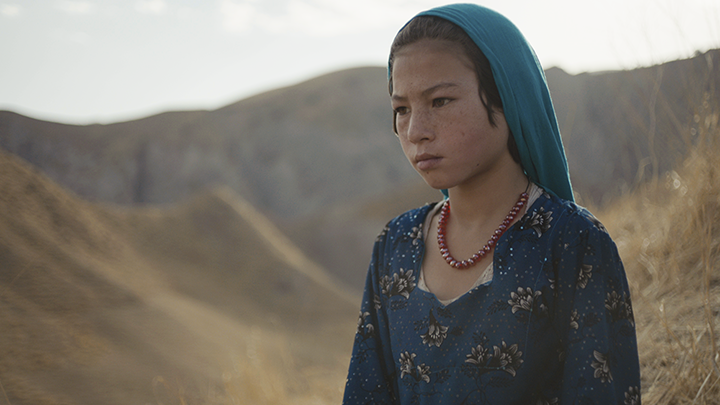
an Asian girl in a blue veil in a beach-like place

Wolf and Sheep – Film Screening

Wolf and Sheep, 2016

Shahrbanoo Sadat

Film screening

Wednesday 27 July at 7pm

Presented as part of Void’s Public Programme for current exhibition Above Us the Milky Way (25.06-27.08.22) featuring the work by artists Orna Kazimi, Kubra Khademi, Mario García Torres and Erkan Özgen.

The films have been co-curated by AVAH collective and filmmaker Parwana Haydar. The films chosen represent three different entry points into Afghan Visual Culture that affect our conversation on collective memory and consciousness as art workers that have biographical ties with Afghanistan.

This movie is by one of the most successful young female Afghan filmmakers working today. She created a new visual language and also established an important representation for Hazaras.

This event is free but booking is essential.

Synopsis

In rural Afghanistan, people are storytellers who make up and tell each other tales of mystery and imagination to explain the world in which they live. The shepherd children own the mountains and, although no adults are around, they know the rules; they know that boys and girls are not allowed to be together. The boys practice with their slings to fight wolves. The girls smoke secretly and play at getting married, dreaming of finding a husband soon. They gossip about Sediqa; she’s eleven years old and an outsider. The girls think she is cursed.

Qodrat, also eleven years old, becomes the subject of gossip when his mother remarries an old man with two wives. Qodrat roams alone in the most isolated parts of the mountains, where he meets Sediqa and they become friends.

In rural Afghanistan, people believe in the stories they invent to tell each other, explaining the mysteries of the world, they don’t understand. Shepherd children own the mountains. Even though there are no grown ups around, they know their rules very well; the main one is that boys and girls are not allowed to be together, they have to be separated. The boys practice with their slings to fight the wolves should they attack the flock. The girls smoke dried branches of wheat secretly and play wedding, dreaming of getting a husband soon. They gossip about every one and everything, but mostly about Sediqa, 11, an outsider among the shepherd children. They think she is cursed, as an evil ghost disguised as a snake bewitched her grandmother.

Sediqa picks up her sheep and goats every morning and drops them in the owner’s house every evening. She dreams of having a sling and learn to swing it like the boys and hit a wolf. Qodrat, 11, becomes the gossip topic of everyone after his mother remarries with an old man with two wives. He prefers to be alone in the most isolated parts of the mountains. This is where he meets Sediqa and they become friends until Qodrat’s mother has to send him away.

Artist’s Biography

Sadat grew up in Tehran and a remote community in central Afghanistan. She studied documentary filmmaking at the Kabul workshop of Ateliers Varan and began her career working in cinema vérité. Her first feature film, Wolf and Sheep, tells the story of a village much like the one where she grew up. It won the top prize at the Cannes Film Festival’s Directors’ Fortnight in 2016.

Director’s Statement

I lived in a small and isolated village in rural central Afghanistan for seven years, which became a very observational period for me, as a child. My severe short-sightedness, my weird accent and my dead grandfather who was able to see spirits, became the reasons for people making me an outsider. I was completely disconnected to the world and had no chance to leave the village.

High mountains surrounded it with only 10 other houses.

The people had no knowledge about the world beyond the mountains; instead they lived based on their own invented rules. And there were many. Lines, one could cross, were all around and almost everywhere, the lines looked invisible to me, but everyone else could see them.

The one, who tried to pass the lines, would be mentally punished by gossip and stories of the community.

A man with three wives, a widow, a girl who had a flirt with a boy, a dead baby found in the river as a result of a pregnant girl before marriage, family history, the way they talked, they way they looked, would create a nickname to them. A nickname could be used as humiliation or just to describe a person. It was those nicknames that made people recognise each other in a community where a lot of people have the same name and no family name.

It was a very hard time for me living there, but now, looking back, I’m proud that I had lived there. Those years gave me a very good recognition of Afghan society.

When I was 18, I moved to the city, Kabul. I studied cinema and I started to make films. My interest in a deeper picture of Afghanistan through routine life and every day life made me an outsider between the filmmakers. Being that doesn’t bother me anymore. I want to get rid of all the clichés about this country of rich culture and discover a new image.

Above Us the Milky Way – further information

The title of the exhibition is taken from a novel by Fowzin Karimi that explores the complexities and the impact of war through memories, loss and notions of home.

Many who are forced into exile face forced migration, and the burden of carrying the past into the present and future. The legacy of war, the repression of minorities and women, and the trauma that seeps through the generations forms the focal point of this exhibition.

The effect of war on women is prevalent in parts of the Middle East especially in the past year, most significant is the transformation of Afghan society in terms of girls’ access to education and women losing basic human rights and limits to their freedom. Women and girls suffer disproportionately during and after war, as existing inequalities are magnified and social networks break down, making them more vulnerable to sexual violence and exploitation.

Displacement due to war and conflict has significant implications on people’s sense of place and culture. This dislocation is passed through generations. Postwar, returning generations reach a location that only exists in their imaginations and through the stories of their parents or ancestors what remains is often just a memory and a decimated landscape. This question of how do we change this trajectory, imagining a new way forward that attunes to a more equitable way of being and breaking the repetition of the cycle of history is something that we need to address and is as urgent now as it has been throughout the history of war and conflict.

Many who are forced into exile face forced migration, and the burden of carrying the past into the present and future. The legacy of war, the repression of minorities and women, and the trauma that seeps through the generations forms the focal point of this exhibition.

AVAH Collective

AVAH Collective is an independent and global research collective and multimedia platform with contributing artists, art historians, curators, art world professionals, writers, and creatives covering Afghan Visual Culture, inclusive of its diaspora and minorities. AVAH contributors engage critically with Afghanistan-related and Afghan-diasporic themes at the nexus of mainly visual culture and contemporary art. The collective came together upon recognising a lack of obtainable information and long term initiatives concerning the historical and contemporary practices originating in or relating to Afghanistan.

Parwana Haydar

Parwana Haydar is an early career filmmaker who centers memory, family and collectivity in her practice. Her interest in how political organising merges with art started when she organised in Kin Collective – a film collective for racialised creatives. She is now Activities and Events co-president in the Student Union at SOAS and a student in Other Cinema film school.

Acknowledgements

Image credit:

WOLF AND SHEEP credit Virginie Surdej

Void Gallery is supported by Arts Council Northern Ireland, Derry City and Strabane District Council, Halifax Foundation, The Ragdoll Foundation, The Ireland Funds, Austin and Hope Pilkington Foundation, and Arnold Clarke Foundation.