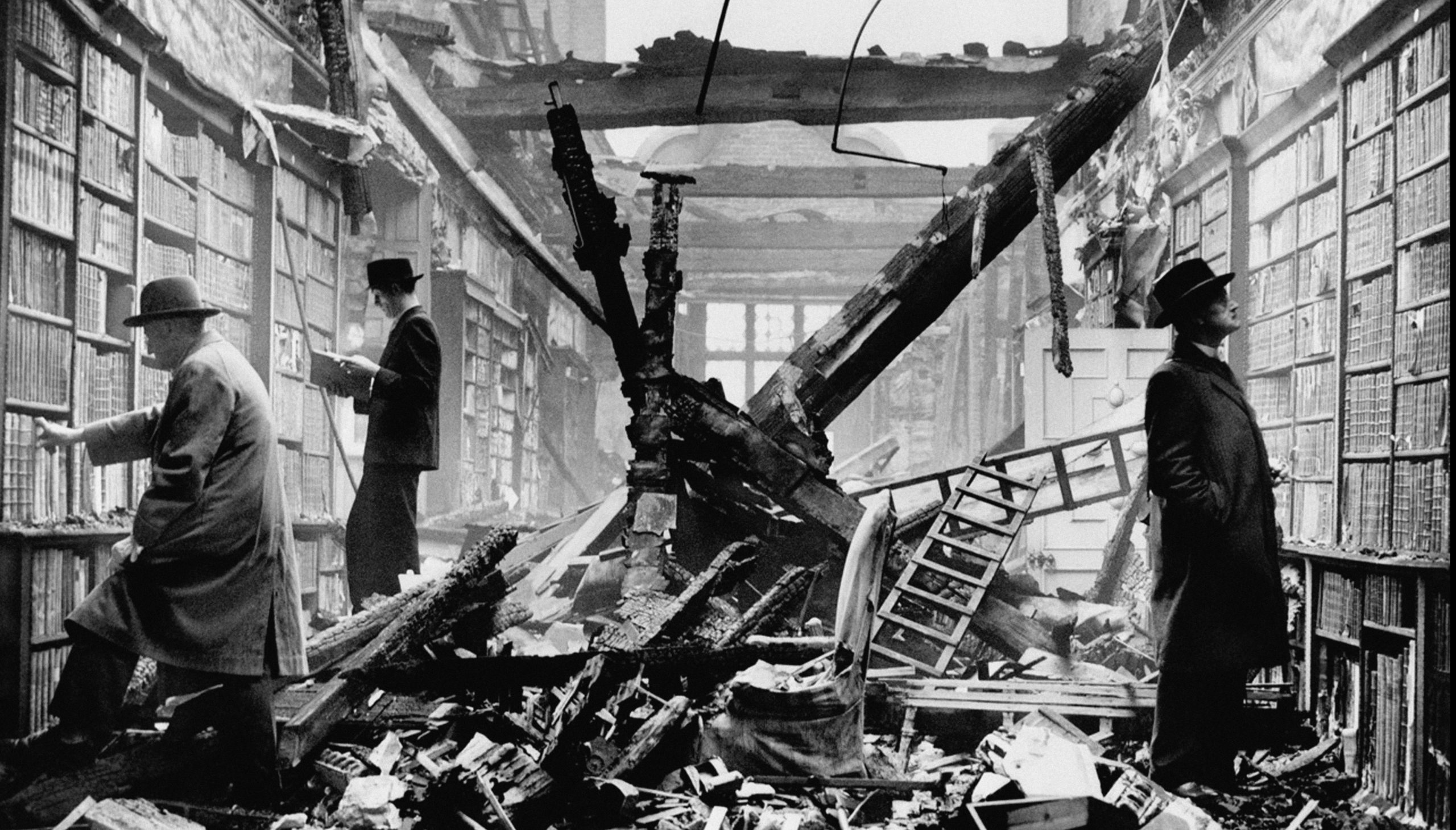
promotional image for Johan Grimonprez, exhibition titled Everyday Words Disappear, at Void Gallery, Derry, 2018

Johan Grimonprez

Void Gallery are delighted to welcome Belgian artist Johan Grimonprez for his solo exhibition Everyday Words Disappear. Grimonprez’s critically acclaimed work dances on the borders of practice and theory, art and cinema, documentary and fiction; demanding a double take on the part of the viewer. Informed by an archeology of present-day media, his work seeks out the tension between the intimate and the bigger picture of globalisation. It questions our contemporary sublime; one framed by a fear industry that has infected political and social dialogue. By suggesting new narratives through which to tell a story his work emphasises a multiplicity of realities.

The exhibition takes its title from the film Every Day Words Disappear (2016). In 1515 Machiavelli stated that it would be better for the Prince to be feared, than loved. Some 500 years later, Michael Hardt, political philosopher and co-author of Empire, Multitude and Commonwealth, asks in this film what it would mean to base a political system on love, rather than on fear. In the dystopian city-state Alphaville, of Godard’s eponymous film, all words and concepts relating to the idea of love and affection have been banned. When actress Anna Karina tries to express her feelings, she has to reinvent the words, for the concept of love is foreign to her. Like the protagonist in Alphaville, Hardt suggests that we need to redefine the tools to act politically together. Hardt embarks on a journey to identify the transformative powers of the ongoing struggle to re-invent democracy. Within this struggle he understands “the commons” as an antidote against a society run by fear; an inspiration for a paradigm that is based on dialogue and cooperation.

How can we transform a society that is increasingly defined by a permanent state of war and cultivated by an industry of fear? How can we realise the paradigm shift necessary to move away from a reality that depends on the exploitation of people and the cult of privatising public resources? Hardt looks for an answer in what he calls “the commons” – by which he refers not only to natural resources but also to the languages we create and the relationships we conceive together.

The exhibition follows the trajectory of Grimponprez’s practice from his seminal work dial H-I-S-T-O-R-Y (1997), which documented the history of plane hijacking from the late 1960s to the 1990s, set against the backdrop depicting a dialogue between a terrorist and a novelist, where the latter contends that the terrorist or bomb-maker has taken over the writer’s territory as he is able to play the media more succinctly. This piece was made prior to 9/11 that transformed geopolitics, to his most recent works, Blue Orchids (2017) and Raymond Tallis, On Tickling (2017); two new films. This exhibition was the first presentation of these films – as well as What I Will – in Northern Ireland and the UK.

Blue Orchids

In Blue Orchids, Grimonprez creates a portrait diptych of two experts on opposite sides of the same issue – the global arms trade. The stories of Chris Hedges, the former war correspondent of The New York Times, and Riccardo Privitera, a former arms & equipment dealer of Talisman Europe Ltd (now dissolved), provide an unusual and disturbing context for shocking revelations about the industry of war. The UK’s arms industry makes about 20% of arms exported globally. Many of the UK customers have questionable human rights records and there are concerns that exported weapons are used for repression, or against military targets, (such as presently sent to Saudi-Arabia to bomb Yemen). This film has a local resonance since one of the world’s leading arms manufacturers was once based in Derry. In 2010, anti-war activists occupied their offices, protesting their activities, which resulted in the company’s decision to close their offices; demonstrating the power of collective resistance.


Blue Orchids was immediately followed by Raymond Tallis, On Tickling. In this short film philosopher/neurologist Raymond Tallis argues that consciousness is not an internal construct, but rather relational. Through the intriguing idea that humans are physically unable to tickle themselves (despite applying the exact same stimulus to the skin as another person would), Tallis explores the philosophical notion that we become ourselves only through dialogue with others.


What I Will

What I Will (2013) is a poignant poem written and narrated by Palestinian-American Suheir Hammad. The flashing footage of military parades and anti-aircraft guns provide the backdrop to her powerful voice, in a time when we have seen unprecedented numbers of people protesting against war this is a valiant protest poem.


Grimonprez’s works provides us with the tools to deconstruct and be critical of the mass media, the State, and the narrative that is driven through different mediums. We are living in complex times; politics are entering the realm of the surreal, the media landscape is totally transformed and with the acceleration of information we need to question what becomes normalised through the landscape of images that we absorb.


For more about Johan’s work please visit his website.


Download the Press Release Below:

Johan Grimonprez Press Release


Acknowledgements

Everyday Words Disappear is funded by Community Foundation NI, John Thaw, Halifax, Derry City and Strabane District Council, Arts Council of Northern Ireland, ACNI Lottery Funded, Kiosk Foundation, The Baring Foundation, Public Health Agency, and events sponsored by Northbound Breweries.
Funders for exhibition by Johan Grimonprez at Void Gallery, Derry, 2018

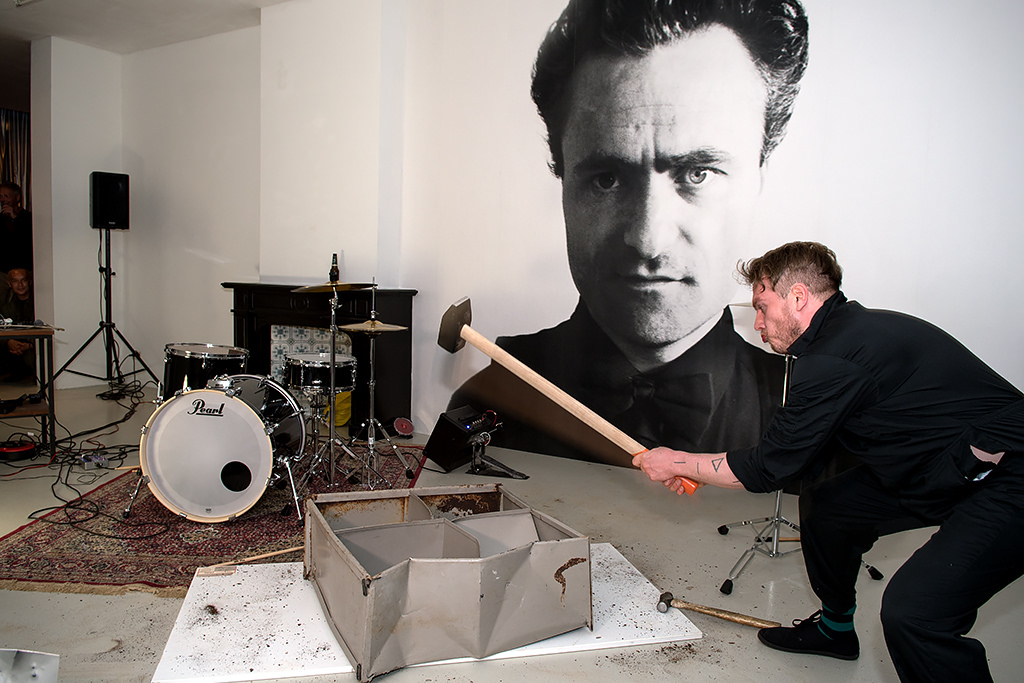
Keef Winter, Tax Return performance 2018

The Winter Series

Void Gallery began 2018 with The Winter Series – a week of performances and screenings by three Irish artists – Keef Winter, Anita Delaney and Sonia Shiel.

Keef Winter

Tax Return


Tax Return by Keef Winter investigates the sonic properties of a filing cabinet using contact mics, effects pedals and a sledgehammer.


Keef Winter Biography

Northern Irish artist Keef Winter lives and works in London. He combines his interests in art and architecture using sculpture, installation, sound and performance. He completed a PhD in 2013 entitled The Handyman Aesthetic at Ulster University. Winter’s studio process generates abstract apparatus that reference urban dissonance and reflect on cultish practices. He has a live act called Handyman that mixes electronics, sounds of sheet steel, vocal samples and drumming.


His recent exhibitions include: Can’t Help It (solo) at Black Tower Projects, London 2017; Pre-Fix, Unofficial Northern Ireland Pavilion, Sella Del Giardini, Venice 2017; Swimming with Sharks (solo), Galeria Breve, Mexico City, 2017; On Becoming Fluid, Hardwick Gallery, Cheltenham, 2017; Wysing Polyphonic, Wysing Arts Centre, Cambridge 2016; Sticky Enough, Chalton Gallery, London 2016; Salon Sebastian Monteux, Glasgow International, 2016; Deep Inside (solo), Galeria Breve, Mexico City, 2016; FUSO & Carpe Diem, Lisbon, 2015; Post-Terminal & Ex-Ultimate, West, Den Haag, 2016; Center Point (solo), House of St. Barnabas, London, 2015; Let’s build our own tomb, Matt’s Gallery, London, 2015; Neutral, TULCA Festival of Visual Art, Galway, 2014; London Dust, Chandelier Projects, London, 2014; Stone Dreams ORGY PARK, New York 2014.


For more information about Keef’s work please visit his website.


Anita Delaney


The Cusp of Your Credenza

HD video and stereo audio, duration 10 minutes 27 seconds


The Cusp of Your Credenza (2015) is a wandering speculation through various material encounters. A woman presents a number of scenarios that involve the ingestion or ejection of substances. From toenails to statuary, muffins to monuments, The Cusp of Your Credenza wonders how we place ourselves bodily in a material world.


Tissue

HD video and stereo audio, duration 4 minutes 17 seconds


Tissue is a short account of the historical and anthropological role of handheld tissues in modern history.

Irish artist Anita Delaney lives and works in London. Working mainly in moving image, she is interested in the tender and abject. She was the 2016-2017 recipient of the New Contemporaries and SPACE studio award. Recent shows include the 2017 Videonale, Bonn, Future Refrains at ASC gallery, London and she is currently working on a new moving image commission for Sick Monday at the Genesis Cinema, London.


Anita Delaney Biography

Working mainly in moving image, Anita Delaney graduated with BA Fine Art from IADT in 2006 and MA Fine Art from Chelsea College of Art, London in 2011. She has recently shown work at The Rotterdam International Film Festival, 1646 Project Space, The Hague and Ormston House, Limerick, Ireland. In 2016 she is the recipient of the New Contemporaries’ Studio Bursary with SPACE in London.


For more about Anita’s work please visit her website.


Sonia Shiel

Dead Her


Dead Her is written, directed and performed by Sonia Shiel in a narrated sequence of synchronised and interwoven, audio-cum-visual punchlines, using animation, performance, appropriated footage and a desktop cursor. In it the central protagonist is a woman half-way through her life, who undergoes treatment to attain a fuller, more meaningful smile.


Sonia Shiel Biography

Sonia Shiel is a Dublin born visual artist, whose works synthesise object, image and sound in performative and immersive installations. At Void Gallery, Shiel premiered Dead Her, a narrated visual presentation, written, directed and performed by the artist. Dead Her is one of a number of recent narrative works that was featured in her new book of short stories each exploring the pursuit of creative agency, – or living – with and without art. It was published in 2018, by UCD‘s Parity Studios Press.


Shiel has had exhibitions at The Crawford Art Gallery, Cork; the Irish Museum of Modern Art, Dublin; the Lewis Glucksman Gallery, Cork; ISCPNew York; Temple Bar Gallery and Studios, Dublin; Kulturbunker, Frankfurt; Rua Red, Dublin; the Butler Gallery, Kilkenny and the RHA Gallery I and II, among many others. Recent performances and readings include Treeline, TBGS, Artbox and the NCAD Gallery. She has been the recipient of many awards, and international residencies, with the support of the Arts Council and Culture Ireland, and has completed recent fellowships at Fordham Law School, New York and the School of English, Drama and Film at UCD.


For more about Sonia’s work please visit her website.


Download the Press Release below:

The Winter Series Press Release


Acknowledgements

Void Gallery is supported by the Arts Council of Northern Ireland and Derry City and Strabane District Council, with events sponsored by Northbound Brewery.


Void funders 2018

Promotional image for Liam Crichton, Stereo Object, 2019, Void Gallery

Liam Crichton

Liam Crichton begins 2019 with his exhibition titled Stereo Object. Crichton creates large-scale sculptures and installations that investigate the built environment. His research revolves around concepts of urban voids, hauntology, anti-monuments, post-minimalism, and silence. Aesthetically driven and predominately site-specific, his work is often characterised by a dialectic approach, which challenges traditional perceptions and the cultural environment.

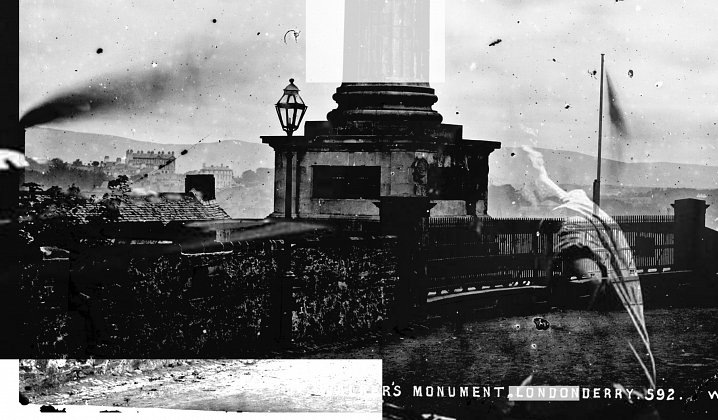
Crichton’s installation at Void Gallery continues his investigation into the monuments, their meaning and their resonance, both symbolically and materially. Crichton’s field recording of the Walker Memorial (1828) explores the contentious nature of its history whilst invoking a presence of absence, or equally, the absence as presence. The recordings of the monument will capture the resonance of sound through the material of the built environment. In collaboration with Derry musician Autumns (Christian Donaghey) the sounds will be mixed to create a soundtrack for the sculptural environment in the gallery space.

The installation of amplifiers replicates the dimensions of the plinth in sculptural form. The connection between the sound and the sculpture is one of physicality, the viewer through their presence activate the piece through interaction, both with the sound and their presence.


Liam Crichton Biography


Liam Crichton is a Scottish artist currently based in Belfast. He graduated from the Edinburgh College of Art in 2010 and is known for creating large-scale sculptures and installations that investigate physical space. Containing references to, and elements of a post-minimal realisation, his aesthetically driven and predominately site-specific work is often characterised by a sense of dichotomy that challenges traditional perceptions and cultural surroundings. In a systematic and reductive process, he breaks down the impression of the familiar to its bare essence. Crichton has recently exhibited in Edinburgh, London, Philadelphia, Dublin, and Belfast.


Autumns Biography


For more about Autumns please visit his website.


Acknowledgements


Void Gallery is supported by the Arts Council of Northern Ireland and Derry City and Strabane District Council, with events sponsored by Northbound Brewery.


Installation photographs courtesy of Tansy Cowley.

Void funders-logos

The Road Ahead, title of photography by Derry artist Willie Doherty, featured as part of group exhibition Opened Ground at Void Gallery, 2019

Opened Ground

Opened Ground is an exhibition featuring the work of artists Willie Doherty, Aslan Gaisumov, and Amar Kanwar.


The title Opened Ground is taken from a collection of poems by Seamus Heaney; written between 1966 and 1996. The poems span a turbulent time in Northern Ireland and delve into both the physical and psychic landscape of that period. The presence of the border is part of the complex narrative of Northern Ireland creating divisions and divides. Since the Good Friday Peace Agreement in 1998 the infrastructures of the military checkpoints have been decommissioned and have become part of the past. With the approaching deadline of Brexit, and the lack of clarity on how the border between Northern Ireland and the Republic of Ireland will manifest, it gives rise to the tension of the possibility of the re-emergence of a ‘hard border’.


Borders are a contentious issue locally, nationally, and internationally. The idea of territorial markings has historically been a constantly shifting ground. The invited artists in this exhibition, Opened Ground, have a shared history as each have a unique relationship with the landscape they reflect on; there is a biographical element to each, bearing witness to the lived experience of both past and present borders, and their effect on society as a whole.


Willie Doherty

Willie Doherty’s early photographic work from the 80’s and 90’s is a powerful reminder of how borders, primarily a political agenda, dislocates culture and the shape of people’s identities and histories. The photographs document how history can mark a terrain and how memory is marked in the landscape. The series of photographs of the border document empty roads reaching into the landscapes laden with overtones of what came before. The poignant photograph The Road Ahead (1997) carries new meaning with the uncertainty of what is to come.


Willie Doherty Biography

Since the 1980s, Willie Doherty has been a pioneering figure in contemporary art film and photography. At once highly seductive and visually disorientating, Doherty’s artworks tend to begin as responses to specific terrains (most often mysterious isolated settings; places, we suspect, with a troubled past) and evolve as complex reflections on how we look at such locations – or on what stories might be told about their hidden histories.

For more about Willie Doherty’s work please visit his website.


Aslan Gaisumov

Aslan Gaisumov’s piece People of No Consequence (2016) explores the effect of displacement of Chechens from what was known as the Soviet Union to Central Asia in 1944. The people gathered in the work represent the collective memory and narrative of the effects of territorial shifts. It is a reminder of the human consequence of political manoeuvring.


Aslan Gaisumov Biography

Aslan Gaisumov (b. 1991 in Grozny, Chechnya) lives and works in Grozny and Amsterdam, NL. He is currently enrolled at Rijksakademie van Beeldende Kunsten, Amsterdam. Current and recent exhibitions include: If No One Asks, CAG Contemporary Art Gallery (Vancouver, CA, 2019); Crystals and Shards, Kohta Kunsthalle, (Helsinki, FI, 2018); Beautiful world, where are you?, Liverpool Biennial (Liverpool, UK, 2018); Everything Was Forever Until It Was No More, 1st Riga Biennale (Riga, LV, 2018); All That You See Here, Forget, Emalin (London, UK, 2018); I Am a Native Foreigner, Stedelijk Museum (Amsterdam, NL, 2017); How To Live Together, Kunsthalle Wien (Vienna, AT, 2017); and People of No Consequence, Museum of Contemporary Art M HKA (Antwerp, BE, 2016).


Amar Kanwar

Amar Kanwar’s piece A Season Outside (1997) explores the demarcation line between India and Pakistan. The film narrated by the artist reveals the anxiety that surrounds the militarised border between India and Pakistan. Partition, the British government’s 1947 division of the Indian subcontinent into two nations—Hindu-majority India and Muslim-majority Pakistan—left millions of people on the wrong side of a border, causing violence that has since escalated into an arms race. Kanwar, through his narration and imagery, lays bare the violence that erupts from this dispossession.


With the instability of global politics and economic precarity, we have witnessed the rise of nationalism and identity politics. The border crisis in Northern Ireland is one signifier of global anxiety. The border currently exists as an imaginary line; a change in texture of road surfaces, a representation of an historical point within our history. The unknown outcome of our political situation turns our attention once more to the border.


Amar Kanwar Biography

Amar Kanwar has distinguished himself through films and multi‐media works, which explore the politics of power, violence and justice. His multi‐layered installations originate in narratives often drawn from zones of conflict and are characterized by a unique poetic approach to the personal, social and political. He is the recipient of numerous awards, including most recently the Prince Claus Award (2017).


Kanwar’s solo exhibitions of the last two years include: Luma Arles; Minneapolis Institute of Arts, Minnesota; and Tate Modern, London (2018); Bildmuseet, Umea (2017); Goethe Institut/Max Mueller Bhavan, Mumbai (2016); Earlier solo exhibitions include the Stedelijk Museum, Amsterdam (2008); the Whitechapel Art Gallery, London (2007); and the Renaissance Society, Chicago (2004), among others. He also participated in the first Lahore Biennale (2018), documenta 11, 12, 13, and 14 in Kassel, Germany (2002, 2007, 2012, 2017).


Acknowledgements


Void Gallery is supported by the Arts Council of Northern Ireland and Derry City and Strabane District Council, with event sponsored by Northbound Brewery.


Installation photographs courtesy of Tansy Cowley.

Void Gallery funders 2020

Promotional image for Alan Phelan, solo exhibition echoes are always more muted, Void Gallery 2020

Alan Phelan

Alan Phelan’s exhibition echoes are always more muted is part of an expanded series of exhibitions that encompass his continuing research into the intersections of history, sexuality, material culture and politics which have evolved through sculpture, participatory events, and photography.

The genesis of this new body of work is the photographic process invented by John Joly (1890s) that created colour via a red, green and blue screen to create the full colour spectrum. The two-layer photograph consists of the striped colour screen and black & white sheet film, which also creates a unique colour shift upon viewing. The process was used into the early 20th Century and abandoned for colour without stripes.

John Joly, the inventor of the process, provides the biographical background to the 15-minute film Folly & Diction (2020). Instead of a detailed documentary, the music video format provides the structure with a narrative taken from a Samuel Beckett short story and narration in the form of song lyrics, culled from a poem by Jean Genet. The video tells an oblique story of loss, a forgotten history, and a failed relationship with his collaborator Henry Dixon. It brings Joly’s photographic process into a contemporary sphere with audio responsive animated stripes that pulse to the music and crude video layering that draws on multiple music video tropes.

Red, green and blue form the basis of how video screens present colour and how we experience colour in all electronic devices; this provides the background for other works in the exhibition. The centre piece of Gallery 1 is an installation of various props and parts which further expand the idea of a photograph as a multi-sensory object moving into an augmented reality and fragrance as a memory trigger. A small RGB hyacinth flower is enlarged via a mobile phone AR app and the sweet scent of the flower pervades the gallery. The mattress, pot, and plant notebook connects to the film, referencing an earlier script – elements that were eliminated in the final cut. The flower has persisted, however, as a memory trigger, as in the film, just like a fragrance, to a different sensory connection with the past.

The recurring use of this trio of colours shift to gels on spotlights, onto a new wall work comprised of screen-printed page layouts, from a zine dealing with images and texts that delve into a wider art history of stripes. The wall is punctuated by a single Joly screen photograph of a headless self-portrait, shot from behind, in red, with red roses, pushing bathos that bit further.

Five new Joly screen images hung close to this are the most recent photographs. They have dense compositions made of dots, with holes in the screen that reflect onto circular mirrors, creating monochrome gaps in the striped screen, overlapping into the objects photographed. Works by John Baldessari and Sigmar Polke provide more recent histories as reference points here.

Ten Joly screen images in Gallery 3 traverse different art histories relating to the pre-photographic photo realism of 17th Century flower paintings; moving through cinematic references, advertising, 1950s ikebana Japanese flower arranging, queer photography, and more. The inherent ambiguity of the images ghosts a history the process never had a chance to image or imagine. Convoluted titles attempt to navigate possible interpretative paths but they only leave echoes of a past that never happened and a present that has still more to achieve or reveal.

This series of works expands on Phelan’s preoccupation with re-imagining history in a contemporary guise, he appropriates histories, deconstructing others to make a mélange of humorous imagery that references the gamut of art and photographic genres. It is an exercise of storytelling that is at once all-encompassing but ultimately a story of invention, failure and love.


Alan Phelan Biography


Alan Phelan (b.1968) is an artist based in Dublin whose practice began in photography and has extended into many different media and mediums with a focus on interpretation, language and collaboration. He studied at Dublin City University and Rochester Institute of Technology, New York. Recent exhibitions and projects include RHA, Dublin; The Dock, Carrick-on-Shannon (2020); Company of Others, CCA, Derry (2020); TBG+S Atrium (2019); The LAB, Dublin (2019); and Glucksman Gallery, Cork (2019).

Our Kind, commissioned by Dublin City Gallery, The Hugh Lane for 2016/1916 was also screened in Oslo, Bergen, Derry, Belfast and Carlow where it won the Hotron Éigse Art Prize. Internationally he has shown at Dada Post, Berlin; Loop, Barcelona; Videonale.15 Bonn Kunstmuseum; Detroit, Stockholm; Bozar, Brussels; Treignac Projet, France; Eastlink Gallery, Shanghai; Oksasenkatu 11, Helsinki; Mina Dresden Gallery, San Francisco; Galería Del Infinito Arte, Buenos Aires; ŠKUC, Ljubljana; SKC Gallery, Belgrade; Whitney Museum of American Art, New York.

Public art commissions include works for Dublin City Council, Dublin South County Council, St Michael’s House Special National School Raheny and the Dept of Communications. He is currently the NCAD School of Fine Art Artist in Residence for 2019-20.


For more about Alan’s work please visit his website.

Download the press release below:

Alan Phelan PR.


Additional events


The RGB Hyacinth

This autumn Alan Phelan will present The RGB Hyacinth as part of Void Offsites. Phelan’s project is a crowd-sourced sculpture made by individual participants in isolation, then assembled together to create the final artwork. This collective making process acknowledges and commemorates the COVID-19 crisis. The sculpture will be of a hyacinth flower; using the red, green and blue colours with petals made in papier-mâché, based around a small similar work due to be exhibited at Void Gallery as part of Phelan’s exhibition ‘echoes are always more muted’ which launches at the same time. It is funded by the Department of Foreign Affairs and Trade. The launch of this sculpture will take place in autumn – please stay tuned to our website for further details.


Acknowledgements


echoes are always more muted is kindly supported by the Arts Council, Ireland; Creative Ireland; Centre Culturel Irlandais, Paris; Demeter Fragrance Library; Dublin City Council; Fire Station Artists’ Studios, Dublin; Meath County Council; National College of Arts and Design, Dublin; the Royal Hibernian Academy, Dublin; Solstice Arts Centre, Navan; Small Night Zine; Temple Bar Gallery and Studios, Dublin; The Dock, Carrick-on-Shannon.


Void Gallery is supported using public funding from Arts Council Northern Ireland, Derry City and Strabane District Council, Enkalon Foundation, Ragdoll Foundation, COVID 19 Charities Fund, Art Fund, and Garfield Weston Foundation.


Installation photographs courtesy of Tansy Cowley.

https://vimeo.com/457899859


Alan Phelan funders

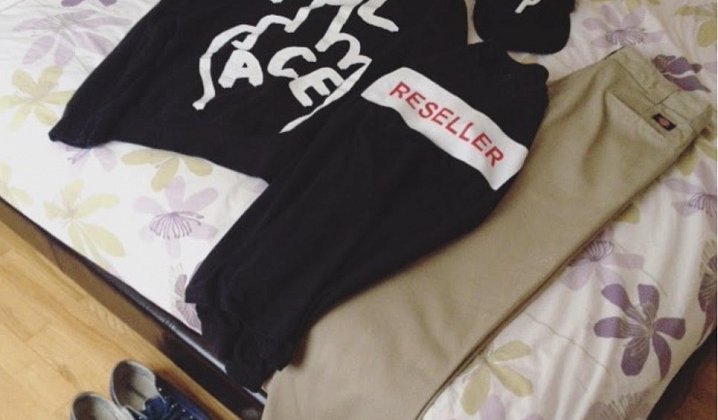
Ima-Abasi Okon, promotional image of an item of clothing lying on a bedspread with a floral pattern; exhibition at Void Gallery, 2020

Ima-Abasi Okon

sur— [infinite Slippage: production of the r ~e ~a ~l as an intensive magnitude starting at zero-eight] —plus is a commission by London and Amsterdam based artist Ima-Abasi Okon in partnership between Void and the Chisenhale Gallery. Okon works with sculpture, sound and video to produce installations that explore exhibition-making as an exercise in syntax, adopting linguistic and grammatical structures within her installations as a way of complicating the construction of knowledge.


For the iteration of the commission, Okon delineates individual aspects of a previous vocabulary of symbols embedded in both hand-made and mass-produced materials, including film to explore representations of the body and the formation of taste, value and excess. A series of industrial air conditioners are adapted to become hosts for a new multi-channel sound piece comprising an existing audio track that has been slowed down. Acting as both a cooling system for the gallery and as a vehicle for the sound work, the fans perform at various speeds and durations.


In another gallery the ceiling has been partially lowered using a standardised modular system, often found within offices, retail spaces, waiting rooms and other administrative environments. The mass-produced ceiling tiles have been smeared with an invisible mixture of morphine, insulin, ultrasound gel and gold, imbuing the otherwise everyday objects with a personal, totemic charge.


Hand-crafted glass light shades, each adorned with an opulent design and filled with palm oil and Courvoisier VS Cognac, hang from the ceiling. With the introduction of these liquids, the lights emit a golden glow, further highlighting an atmospheric friction between Okon’s production processes, pointing to the possibilities of magic as a sculptural act. Okon’s ongoing use of oriented strand board, painted with varnish and framed with ‘exotic woods’ further explore how value is assigned to a given object or material through its categorisation, modes of display and origin.


Through the use of sound, scale and light and film, Okon’s commission makes audible and palpable an excess, or surplus, that is often silenced or not seen and in doing so questions how to represent a body in its absence. Ima-Abasi Okon’s practice across print, sculpture and moving image revolves around a preoccupation with knowledge, its production and the methods which language both regulates and distributes it. The result is work that often deals with how information is performed as an extension of knowledge.


This new commission was made in partnership with the Chisenhale Gallery, London.


Ima-Abasi Okon Biography

Ima-Abasi Okon lives and works between London and Amsterdam. Selected exhibitions include: Infinite Slippage: nonRepugnant Insolvencies T!-a!-r!-r!-y!-i!-nas Handclaps of M’s Hard’Loved’Flesh [I’M irreducibly undone because] —Leanage-Complex-Dub, Chisenhale Gallery, London, UK, The Weather Garden: Anne Hardy curates the Arts Council Collection, Towner Art Gallery, Eastbourne (2019); Sur— [MIX-USE COMMODITY] —plus, Kingsgate Project Space, London; Parables for the BLAZER: Mahalia’s EXCISTENCEandEXISTENTS-HyPE fragrant stacking balm (306.HAL), Plaza Plaza, London; 13th Dak’Art Biennale, Dakar, Senegal; There’s something in the conversation that is more interesting than the finality of (a title), The Showroom, London (all 2018); and UNTITLED: Art on the Conditions of Our Time, New Art Exchange, Nottingham (2017). In 2018, she was awarded both the Nigel Greenwood Research Prize and the Summer Residency at Hospitalfield, Scotland. She is currently participating in the residency programme at Rijksakademie voor beeldende kunsten (Academy for fine arts), Amsterdam.

For more about Ima’s work please visit her website.


Photo credit: Odudu Okon


Installation photographs courtesy of Tansy Cowley.