Archives: Viewing Rooms

Re_sett_ing_s – Locky Morris and Jaki Irvine

Isabel Nolan
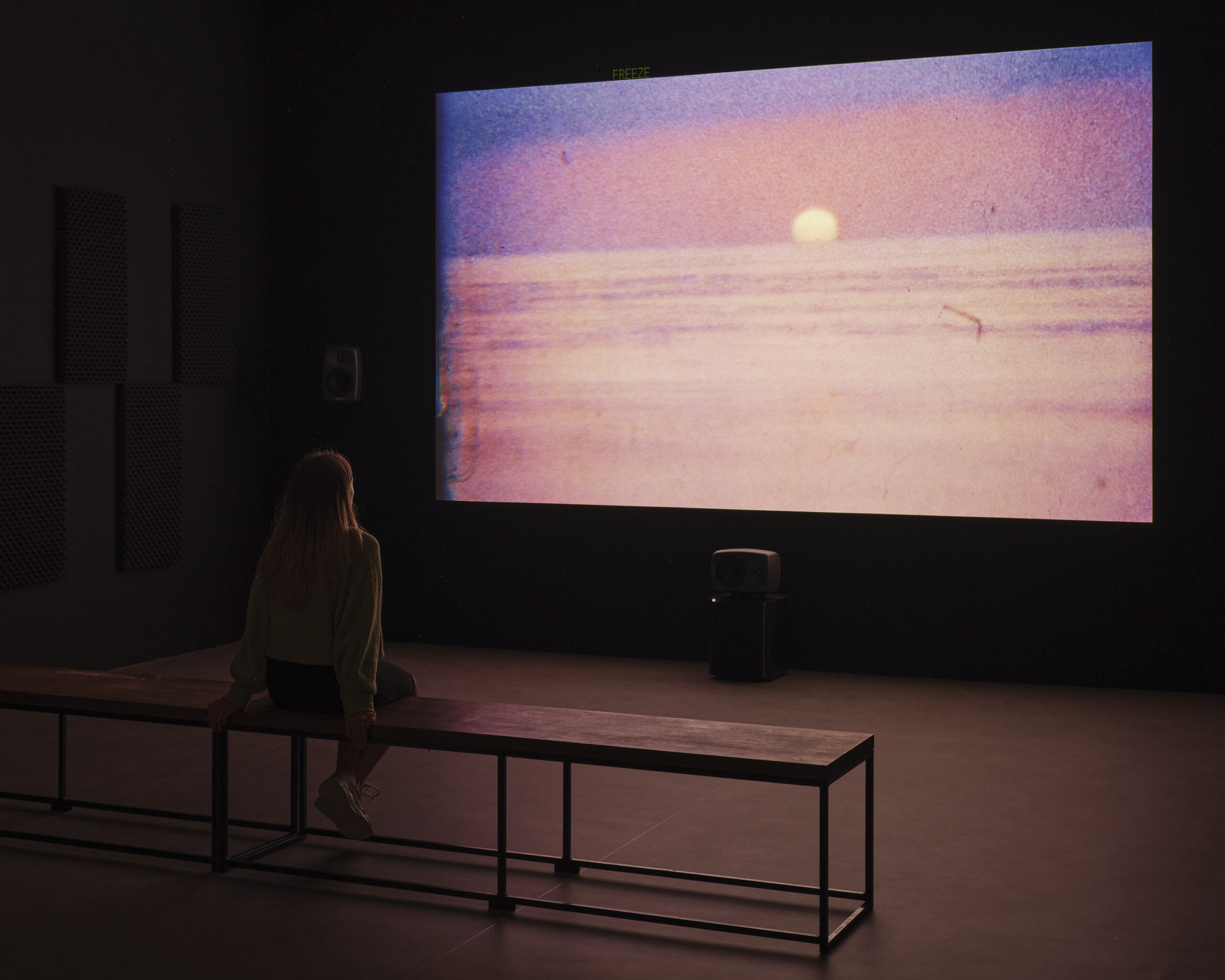
Luke Fowler, Being in a Place: A Portrait of Margaret Tait
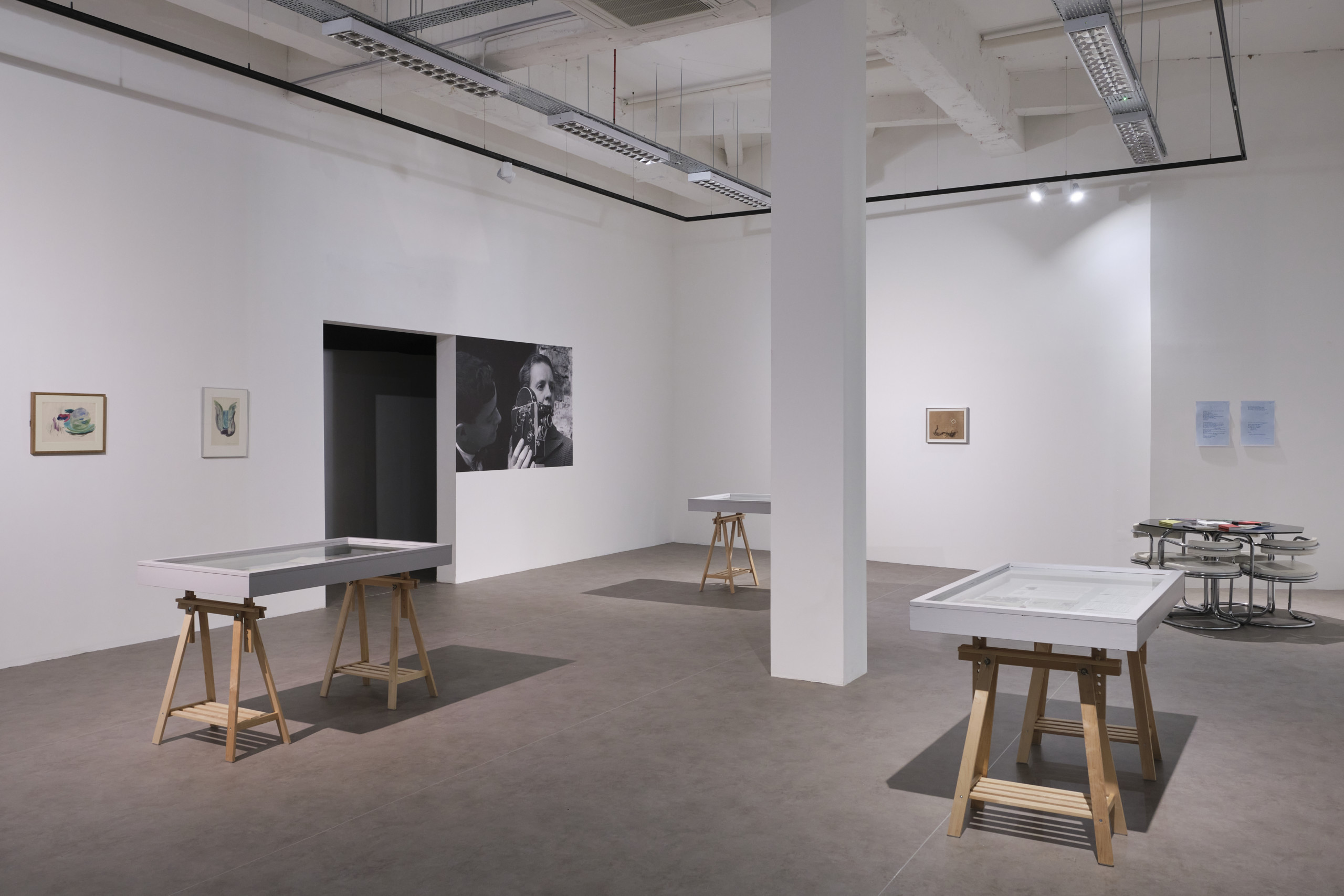
Above Us the Milky Way
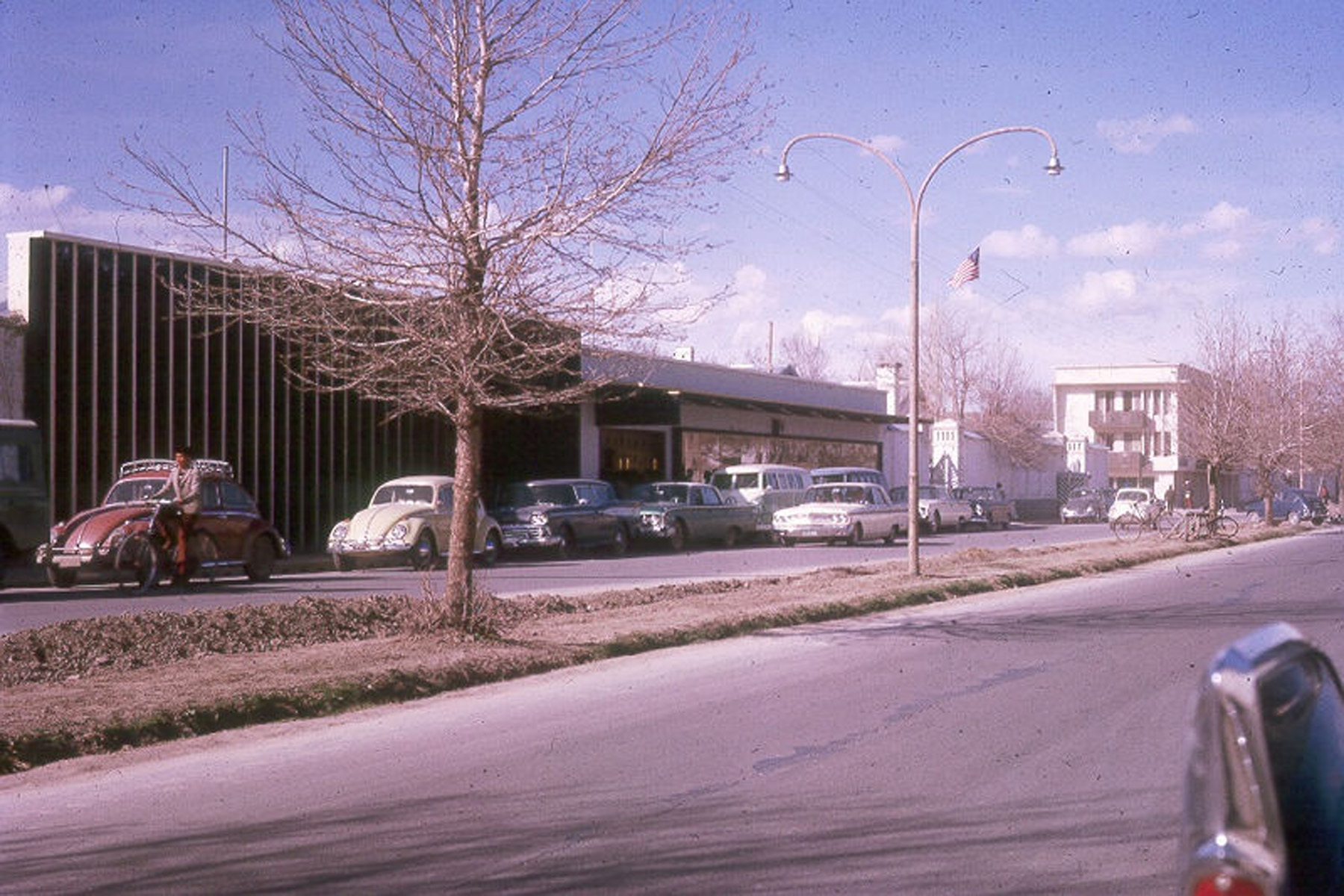
Invernomuto, BLACK MED SECCO

Aleana Egan, Sampler
Sampler
Void is delighted to present Sampler, the first solo exhibition by artist Aleana Egan in Northern Ireland. The exhibition brings together existing works and newly commissioned pieces, which expand on Egan’s nuanced approach to working with materials that are familiar and that often have residual memories associated with them. The word sampler derives from the Latin exemplum, meaning an ‘example’. In the context of sewing and textiles it was originally like a personal notebook for keeping stitches and motifs of interest together. Bringing works together under this title Egan intends to put emphasis on the ephemeral and fragmentary. It continues her investigation into creating an ambient space through which to convey emotions by using sparing sculptural gestures. In short, expressing the immaterial through material means.[/vc_column_text][vc_row_inner][vc_column_inner width=”1/6″][/vc_column_inner][vc_column_inner width=”2/3″][/vc_column_inner][vc_column_inner width=”1/6″][/vc_column_inner][/vc_row_inner][/vc_column][vc_column width=”1/6″][/vc_column][/vc_row][vc_row el_class=”content-first”][vc_column css_animation=”fadeInDown” width=”1/6″][/vc_column][vc_column width=”2/3″ css=”.vc_custom_1615546337707{margin-top: -130px !important;}”][vc_column_text]The exhibition alludes to Derry city’s long history in the textile industry. The traces of these shirt factories are reflected in the city’s architecture but little is left of the material culture of that time period. Egan has a keen interest in textiles, and has used them throughout her practice and exhibition making. In this exhibition Egan tentatively asks the viewer to consider vulnerability and the inchoate as values from which to view the world. [/vc_column_text][/vc_column][vc_column width=”1/6″][/vc_column][/vc_row][vc_row el_class=”single-image-full”][vc_column css=”.vc_custom_1615546885825{margin-top: -120px !important;}”][vc_column_text]
Window
[/vc_column_text][vc_gallery type=”flexslider_slide” interval=”3″ images=”3731″ img_size=”large”][vc_row_inner el_class=”t-box”][vc_column_inner width=”1/6″][/vc_column_inner][vc_column_inner width=”2/3″][vc_column_text]panel (sand), 2021
The first encounter of Egan’s work is in the window of the gallery. The piece titled panel (sand) (2021) references an image of the doors from Matisse’s last studio in Vence in the south of France. The work is our entry point to the exhibition, as Egan designed Sampler as three stages.[/vc_column_text][vc_empty_space][/vc_column_inner][vc_column_inner width=”1/6″][/vc_column_inner][/vc_row_inner][vc_column_text]
Gallery one
[/vc_column_text][vc_empty_space][vc_gallery type=”flexslider_slide” interval=”0″ images=”3741,3742,3743,3744,3745,3746″ img_size=”large” title=”repeating earth (2017) and made boats (2017)”][/vc_column][/vc_row][vc_row el_class=”flower-image”][vc_column width=”1/6″][/vc_column][vc_column width=”2/3″][vc_column_text]When we experience Egan’s work we are reminded of the term ‘infrathin’ that was assigned by the artist Marcel Duchamp, it is an elusive term conceptually: something that can be felt but not articulated, he compared it to ‘the warmth of a seat that has just been vacated’ or the smell of a mouth that has released tobacco. Capturing this abstracted material process, Egan creates bodies of work that feel ephemeral or subliminally fleeting. The pieces in the exhibition span from 2007 to now, delineating the process of Egan’s work and her continuing exploration of materials and her relationship between text and process.
In gallery one, works such as repeating earth (2017) and made boats (2017) are titles taken from modernist writer Mary Butts whose writing is often typified by her interest in our connection to nature and landscape as means of accessing a form of spiritualism and the relationship between body and the environment. These wall based works are draped on the walls, an assemblage of materials; noil, tape, plaster, card, pigment and jesmonite. Their fragile material presence evokes both the spiritual and the shadows.[/vc_column_text][vc_empty_space][vc_empty_space][/vc_column][vc_column width=”1/6″][/vc_column][/vc_row][vc_row el_class=”bottom-last-image”][vc_column][vc_gallery type=”flexslider_slide” interval=”3″ images=”3747″ img_size=”large” title=”nature had an inside (2021)”][/vc_column][/vc_row][vc_row][vc_column width=”1/6″][/vc_column][vc_column width=”2/3″][vc_column_text]In the years during Covid 19, Egan has returned to painting, she referred to it as a time of retreat and a means of becoming more self-sufficient in her practice. This idea of retreat is something we all relate to during the pandemic, staying within your bubble and periods of isolation has led to many of us rethinking how we work or what we prioritise in our lives. This is reflected in the art that is made during this period. Egan’s painting nature had an inside (2021) has a liminal quality, through her use of gouaches and how they are absorbed into the linen which, juxtaposed with the oil paint, creates a more formal structure to the piece. The paintings continue the refrain in Egan’s work of vulnerability, fragility and the intangible depicting an interior world.[/vc_column_text][vc_empty_space][vc_empty_space][/vc_column][vc_column width=”1/6″][/vc_column][/vc_row][vc_row][vc_column][vc_gallery type=”flexslider_slide” interval=”0″ images=”3754,3755,3758,3757″ img_size=”large” title=”returns (2020 / 21), sound clips (2021)”][vc_empty_space][vc_column_text]
Gallery two
[/vc_column_text][vc_empty_space][vc_gallery type=”flexslider_slide” interval=”0″ images=”3748,3749″ img_size=”large” title=”memory shape (2021)”][/vc_column][/vc_row][vc_row][vc_column width=”1/6″][/vc_column][vc_column width=”2/3″][vc_column_text]In more recent times Egan has been deeply engaged with the work of British artist and psychoanalyst Marion Milner (1900-1998) and her attention to a wide-angled focus; the oceanic over a sharp pointed rational focus that she returns to. Her writings have influenced how Egan assembles the work in the exhibition and the gestural interpretations of the pieces. Memory and dreams are brought into focus and the useful flex of nostalgia is exercised. The ‘primacy of memory as a mode of consciousness’, as Walter Benjamin stated, is a fluid phrase which reminds us of the potential for art to reveal something we do not yet realise we know, that would not yield to words. The new sculptures are enigmatic forms made from fabric, wood, papier-mâche, steel, shadows and dust. The fabricated steel piece titled memory shape (2021) in gallery two is filigree in register, it’s dimensions are filled with cellulose fibre, an insulating material made up of paper and cardboard.[/vc_column_text][vc_empty_space][vc_empty_space][/vc_column][vc_column width=”1/6″][/vc_column][/vc_row][vc_row][vc_column][vc_gallery type=”flexslider_slide” interval=”0″ images=”3750,3752″ img_size=”large” title=”ray-shaped darts (2021), Dress for Marion (2021, be forgiving! change roles (2007)”][/vc_column][/vc_row][vc_row][vc_column width=”1/6″][/vc_column][vc_column width=”2/3″][vc_column_text]In seeking to describe Egan’s work, there is a gap between what you perceive and how it is understood, the works punctuate the gallery space and create interfaces and interactions that tend to avoid definition, returning to the idea of that which can be felt but not named. The interactions with materials are fleeting moments, chance encounters with things that are too slight to be defined but in the context of the exhibition become whole.[/vc_column_text][vc_empty_space][vc_empty_space][/vc_column][vc_column width=”1/6″][/vc_column][/vc_row][vc_row][vc_column][vc_gallery interval=”3″ images=”3753″ img_size=”large” title=”low-level imagery (2021)”][/vc_column][/vc_row][vc_row][vc_column width=”1/6″][/vc_column][vc_column width=”2/3″][vc_column_text]
Acknowledgements
Void Gallery is supported using public funding from Arts Council Northern Ireland, Derry City and Strabane District Council, Enkalon Foundation, Ragdoll Foundation, and Art Fund.
Sampler is supported by Konrad Fischer Gallery, Kerlin Gallery, Henry Moore Foundation and The Elephant Trust.[/vc_column_text][vc_column_text]
Photos: Simon Mills
[/vc_column_text][/vc_column][vc_column width=”1/6″][/vc_column][/vc_row]

Eva Rothschild, The Shrinking Universe
The Shrinking Universe
Void Gallery is delighted to present The Shrinking Universe by Eva Rothschild, as part of the Ireland at Venice 2019 National Tour. The Shrinking Universe was the national representation of Ireland at the 58th International Art Exhibition of La Biennale di Venezia 2019, curated by Mary Cremin. The Shrinking Universe was conceived in pre-pandemic times. Since its presentation in the Venice Biennale 2019 we have seen the world transformed through global lockdowns, restrictions in the movement of people and Brexit. These are complex times we are living in and the issues that this exhibition was addressing in 2019 are still pertinent today; the climate crisis is currently being addressed at 2021 United Nations Climate Change Conference, and the migrant crisis is at the fore, as we see currently on the border between Poland and Germany. The Shrinking Universe is a direct response to the complexity of our political situation, employing sculpture as a catalyst for exploring how we think about the world and ways this is reflected in materiality. When thinking about this exhibition, the reference images that formed its basis were taken from mass media; images of protestors on walls, soldiers mounting blockades, images of ruins and piles of detritus that reflect on our consumer culture. Drift (2019), a cast concrete wall with a mass of cast cans that push against the wall, directly reflects these scenes as does Amphi (2019) which mimics Styrofoam blocks that reflect material waste and architectural contexts that we often find ourselves in. Rothschild’s references expand into the everyday lived experience while embracing the language of abstraction and contemporary visual culture. Eva Rothschild’s work is radically inventive and has a deep engagement with the history of modernism and sculptural tradition. The geometrical framings and the sculptural occupancy of space reflect her preoccupation with material presence as her use of color evokes an interest in the field of painting, this can be seen in her piece Princess (2018). This vividly dramatised work makes use of the height of the gallery, highlighting spatiality through geometric forms that often occupies Rothschild’s work; the interiors sections are meticulously painted adding to the dynamism of the piece.
The Shrinking Universe brings together expansive sculptural groups, each with their own concerns and identity, in which disparate forms converse, interrupt and seek to upstage each other. In gallery 2 we encounter a physical barrier coercing and controlling our passage through the exhibition and referencing what Rothschild refers to as the “hazard architecture” that has become a ubiquitous dormant presence in our anxious cities. Once within the exhibition, we are among a multiplicity of making in fabric, steel, resin and bronze. Different scales and formats compete, casting us as spectators of – and active participants in – the whole.
Gallery One
Princess/An Organic Threat, 2019-2021
Princess rises from a base of cast columns, its triangular forms stretching high above the ground and forcing our eyes to trace its precarious and optimistic progression. The sculpture rests on waxed fabric crash mats, demarcating a space of safety around the sculpture, but failing to fully contain it as it meanders beyond its boundaries into the surrounding space. Both Amphi and the truncated columns reference the ruins of past civilizations, while the antic triangular elements of Princess attempt a progressive geometric escape from their earthbound forms.
Spektor, 2019
Spektor is a cast bronze of towering head-like forms, acts as a sentinel or ghostly presence: a watcher by the gates coolly observing the other works.[/vc_column_text][/vc_column_inner]
Gallery Two
Amphi, 2019
In Amphi a series of cast polystyrene blocks are pushed together, pockmarked and graffitied; they are reminiscent of a temporary roadblock or barricade. The viewer is invited to engage with this social sculpture, to climb and to sit, to directly encounter the piece and to become both spectator and participant, actively present within the work.
Drift, 2019
Drift, a wall of cast concrete blocks painted in Rothschild’s signature geometric forms, is architectural and foreboding, its position controlling our entry to the space. Heaped against this wall we find a mass of cast forms hovering between the referential and the abstract, alluding to both geographical forces and the disposable nature of consumable materials.
Origins, 2021

Beating a Retreat | Cevdet Erek
Beating a Retreat
Void is delighted to present Beating a Retreat with Cevdet Erek. Cevdet Erek is an Istanbul based artist and musician. A background in architecture, sound engineering, and performing in a band forms the basis of his practice. In his working process Erek often responds to the architectural context through interventions, using sound to inhabit the space. His work is provocative, proposing new perspectives.
The exhibition was disrupted by COVID 19 and due to travel restrictions, has been developed remotely. Erek has developed Beating a Retreat through the lens of conversations, processes of experimentation and virtual tools. The conditions of production from a distance create a direct connection and correlation with some of the artist’s previous works; Room of Rhythms – Long Distance Relationship, Sydney Biennial, 2016 and A Long Distance Relation, MUAC, Mexico City, 2017
The exhibition starts with Welcome (2019) a sound piece installed at the entrance ramp of Void Gallery and culminates in Goodbye (2019) at the end of the exhibition. The signal from the loudspeakers interferes and disrupts the gallery space. This is a recurring theme in Cevdet’s previous large scale installation works such as ÇIN (Turkish Pavilion, Venice Biennale, 2017), Bergama Stereo (Hamburger Bahnhof, Berlin, 2019) and Bergama Stereotip (Arter, Istanbul, 2019-20). For the exhibition Erek has composed a new sound piece with the bodhrán- an instrument associated with traditional Irish music of the 1960’s. The history of the bodhrán is often connected with the ancient Celts and has a musical history that predates Christianity. Through his exploration of the bodhrán and framed drums widely used across Northern Africa and the Middle East, as well as Turkey and the wider region, Erek draws parallels between the traditions of disparate cultures.
For the sound piece Back – cut loops from a long improvised recording – a bodhrán was sent to Istanbul upon the request of Erek, who returned the drum to Void adding a drawing to the drum’s body. In Back, Erek plays the drum in an unusual way: using fingers on the wooden holder and frame of the drum, rather than the skin of the instrument. Several different loops, cut from the long recording, will be installed during the exhibition period.
The sound of the percussion alludes to the title of the exhibition, Beating a Retreat, a reference to the military use of drums in signifying the end of battle and a retreat. The piece follows the artists’ previous solo performances with past music releases Davul (2017) and Zincirli (2021), via Subtext Recordings, that consist of long duration improvisations and experimental playing and recording techniques applied on the davul – a popular bass drum from Anatolia, Balkans and the wider region.
The same bodhrán that Void sent to Erek is displayed with the addition of a drawing by the artist on parchment made of goatskin. The drawing unifies the bodhrán’s drum skin and the parchment, which are from seperate parts of the world, and brings together traditional ways of using the material- building a drum to hit / touch and to write or draw on. In this piece, Erek stages an intervention upon the graphics of Void Gallery – at either side of the diagonal black line on Void’s branding, Erek has added pink arrowheads, which reference the use of arrows in maps to refer to the movement of people or goods.
Parchment is a material used for writing made from animal skin originating in the city of Pergamon in the 2nd century BC. Parchment takes its name from the city which was the center of parchment production during the Hellenistic period. Erek’s long time project Bergama Stereo and its variations involved research into the historical perception and political interpretations of Pergamon Altar which led to an ongoing debate on the axis of travel and context. The parchment used in the exhibition was originally a gift from a student of the last parchment craftsman in town who Erek met during his visits to Bergama – the Turkish name for the ancient city of Pergamon as well as the contemporary city and district. With the current Covid restrictions borders have come to the fore and, through the use of colour coding, travel restrictions are enforced – a global retreat where the disparities between countries are highlighted. The global economic imbalance has become more pronounced through the pandemic and the divergence of governmental responses has meant that there is a lack of global cohesion.
Across the world, our perception and experience of time has been inextricably altered. Erek’s series Rulers and Rhythm Studies (2007 – ongoing) addresses this through the inference of rulers as a marker of time.
Ruler 2019 BC19 to 1 AC19 bases itself on an imaginary COVID 19 calendar that takes 2020, the year that the pandemic was declared by WHO, as its year zero. The ruler goes back to 1AC, marking the year as 2019 BC19, one year after the birth of Christ according to the Gregorian calendar.
Erek is interested in how we comprehend the world around us and how we organise our lives through time and space. As our lives slow down and we move through this tumultuous period Erek’s exhibition provides a punctuation; a meditation on our present condition.
Elizabeth Price | CHOREOGRAPH
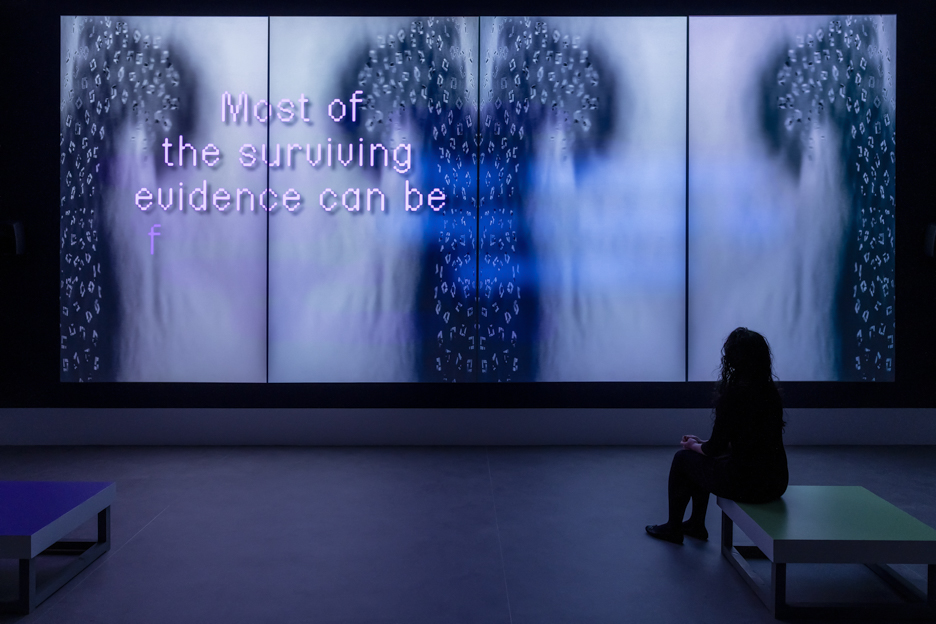
Void Gallery is delighted to present CHOREOGRAPH, the first solo exhibition of Elizabeth Price in Northern Ireland. Price’s distinctive film works inhabit the digital world using computer animated voices, graphics and a saturated videography that give the works a dystopic sensibility, exploring the human experience from industrialisation to the digital age.
The films are anthropological, often exploring mundane objects and imbuing them with a relevance, and situating them within an historical moment.
Emerging from this period of lockdown, where technology became our means of connection to the world, Price’s work embodies this notion of the cognitive harmony between the body and the machine. The title CHOREOGRAPH, a term derived from the Greek words: dance (chorus) and to write (graphy) is a reference to how the multi-screen works synchronise in the space aligning with the rhythms of the music, dance and writing and narrative that unfolds in the pieces.
THE TEACHERS (2019) is part of the trilogy SLOW DANS, the storyline follows a dystopian future where a contagion has spread rapidly through the establishment. The affected, THE TEACHERS communicate in the work through wearing elaborate costumes and perform absurd and profane rituals. The four narrators dispute the reasons for their continuing silence, it could be viewed as a silent protest. The disembodied figures reflect a Rorschach folding and unfolding reminiscent of a book page turning. The four-screen projection is choreographed visually to mimic a ritualistic form of movement. This piece alludes to the corporate structures or the ‘executive realm’ whose decisions affect the access to higher education which resonates with the current proposed funding cuts to art education. With FOOTNOTES (2020), the four chapters STILETTO, SUPERTUNICA, COAL and INKY SPIT follow the etymological exploration of cultural and technical histories. The single screen works were made during the period of lockdown, mining material from the internet and utilising hand-built sets, and recorded in total darkness, using infra-red light. The Inky Spit is a reference to the black lung often a physical manifestation to working in coal mines. The significance of the lungs could echo events in the last year with the utterance of George Floyd’s last words, “I can’t breathe’, which became a mantra for the Black Lives Matter movement and the respiratory virus that has led to mass deaths across the world from a lack of oxygen.
Viewing Room Sample – Dont Delete
[vc_section full_width=”stretch_row” content_placement=”middle” el_class=”full-width” css=”.vc_custom_1616063489396{background-color: -#f9f9f9 !important;}”][vc_row][vc_column width=”1/6″][/vc_column][vc_column width=”2/3″][vc_custom_heading text=”Candida Powell-Williams” font_container=”tag:h2|font_size:28px|text_align:left|color:%23333333|line_height:28px” use_theme_fonts=”yes” el_class=”post-text-block”][vc_row_inner][vc_column_inner][vc_column_text]
Command Lines
[/vc_column_text][/vc_column_inner][/vc_row_inner][/vc_column][vc_column width=”1/6″][/vc_column][/vc_row][vc_row el_class=”video-content”][vc_column][rt_popup_video popup_video_link=”https://www.youtube.com/embed/tgbNymZ7vqY?autoplay=1&mute=1″ popup_video_image=”2817″ popup_video_title=”Candida Powell-Williams” popup_video_subtitle=”Artist’s Talk” popup_video_image_icon=”2815″][vc_row_inner][vc_column_inner el_class=”video-text”][vc_custom_heading text=”Candida Powell-Williams” font_container=”tag:h3|font_size:24px|text_align:center|color:%23ffffff|line_height:27px” use_theme_fonts=”yes”][vc_custom_heading text=”Artist’s Talk” font_container=”tag:h5|font_size:20px|text_align:center|color:%23eaeaea|line_height:30px” use_theme_fonts=”yes”][vc_single_image image=”2816″ alignment=”center”][/vc_column_inner][/vc_row_inner][/vc_column][/vc_row][/vc_section][vc_row el_class=”top-width”][vc_column width=”1/6″][/vc_column][vc_column width=”2/3″][vc_column_text css=”.vc_custom_1615891372920{padding-top: 70px !important;}” el_class=”command-line”]Command Lines is a theatrical installation of sculpture, performance and animation by artist Candida Powell-Williams. The works re-imagine the iconic tarot as a three-dimensional experiment in symbolism, action, story-telling and magical thinking. Powell-William’s installation uses the term Command Lines to frame the exhibition, insinuating systems, networks and feedback loops, control over and order of information. Her work builds on the play between performance, technology and sculptures that act as props to her fantastical stage setting, calling into questions structures of reality.[/vc_column_text][vc_column_text]I am text block. Click edit button to change this text. Lorem ipsum dolor sit amet, consectetur adipiscing elit. Ut elit tellus, luctus nec ullamcorper mattis, pulvinar dapibus leo. Lorem ipsum dolor sit amet, consectetur adipiscing elit. Ut elit tellus, luctus nec ullamcorper mattis, pulvinar dapibus leo.[/vc_column_text][vc_row_inner][vc_column_inner width=”1/6″][/vc_column_inner][vc_column_inner width=”2/3″][/vc_column_inner][vc_column_inner width=”1/6″][/vc_column_inner][/vc_row_inner][/vc_column][vc_column width=”1/6″][/vc_column][vc_column][vc_row_inner el_class=”slide-content” css=”.vc_custom_1615782424802{padding-top: 35px !important;}”][vc_column_inner][vc_gallery interval=”3″ images=”2815,2814″ img_size=”full”][/vc_column_inner][/vc_row_inner][/vc_column][/vc_row][vc_row el_class=”content-first”][vc_column css_animation=”fadeInDown” width=”1/6″][/vc_column][vc_column width=”2/3″ css=”.vc_custom_1615546337707{margin-top: -130px !important;}”][vc_column_text]Command Lines is a theatrical installation of sculpture, performance and animation by artist Candida Powell-Williams. The works re-imagine the iconic tarot as a three-dimensional experiment in symbolism, action, story-telling and magical thinking. Powell-William’s installation uses the term Command Lines to frame the exhibition, insinuating systems, networks and feedback loops, control over and order of information.[/vc_column_text][/vc_column][vc_column width=”1/6″][/vc_column][/vc_row][vc_row el_class=”content-second”][vc_column css_animation=”fadeInDown” width=”1/4″][/vc_column][vc_column width=”1/2″][vc_column_text]“Lorem ipsum dolor sit amet, consectetur adipiscing elit. Morbi ut neque eget nunc venenatis porttitor in ac lorem. Proin eget posuere nibh. Nullam ornare ornare dui, sit amet tempor odio suscipit fringilla.“[/vc_column_text][/vc_column][vc_column width=”1/4″][/vc_column][/vc_row][vc_row el_class=”content-third”][vc_column css_animation=”fadeInDown” width=”1/6″][/vc_column][vc_column width=”2/3″][vc_column_text]Command Lines is a theatrical installation of sculpture, performance and animation by artist Candida Powell-Williams. The works re-imagine the iconic tarot as a three-dimensional experiment in symbolism, action, story-telling and magical thinking.[/vc_column_text][/vc_column][vc_column width=”1/6″][/vc_column][/vc_row][vc_row el_class=”single-image-full”][vc_column css=”.vc_custom_1615546885825{margin-top: -120px !important;}”][vc_gallery type=”flexslider_slide” interval=”3″ images=”2815″ img_size=”large”][vc_row_inner el_class=”t-box”][vc_column_inner width=”1/6″][/vc_column_inner][vc_column_inner width=”2/3″][vc_column_text]Command Lines is a theatrical installation of sculpture, performance and animation by artist Candida Powell-Williams. The works re-imagine the iconic tarot as a three-dimensional experiment in symbolism, action, story-telling and magical thinking. Powell-William’s installation uses the term Command Lines to frame the exhibition, insinuating systems, networks and feedback loops, control over and order of information.[/vc_column_text][/vc_column_inner][vc_column_inner width=”1/6″][/vc_column_inner][/vc_row_inner][/vc_column][/vc_row][vc_row el_class=”video-content”][vc_column][rt_popup_video popup_video_link=”https://vimeo.com/513402725″ popup_video_image=”2674″ popup_video_title=”Candida Powell-Williams” popup_video_subtitle=”Artist’s Talk” popup_video_image_icon=”2815″][vc_row_inner][vc_column_inner el_class=”video-text”][vc_custom_heading text=”Candida Powell-Williams” font_container=”tag:h3|font_size:24px|text_align:center|color:%23ffffff|line_height:27px” use_theme_fonts=”yes”][vc_custom_heading text=”Artist’s Talk” font_container=”tag:h5|font_size:20px|text_align:center|color:%23eaeaea|line_height:30px” use_theme_fonts=”yes”][vc_single_image image=”2816″ alignment=”center”][/vc_column_inner][/vc_row_inner][/vc_column][/vc_row][vc_row el_class=”flower-image”][vc_column width=”1/6″][/vc_column][vc_column width=”2/3″][vc_gallery type=”flexslider_slide” interval=”3″ images=”2818″ img_size=”large” css=”.vc_custom_1618497335973{margin-bottom: 0px !important;border-bottom-width: 0px !important;padding-bottom: 0px !important;}”][vc_column_text]Buy now[/vc_column_text][/vc_column][vc_column width=”1/6″][/vc_column][/vc_row][vc_row el_class=”bottom-last-image”][vc_column][vc_gallery type=”flexslider_slide” interval=”3″ images=”2820″ img_size=”large”][/vc_column][/vc_row][vc_row el_class=”last-image”][vc_column width=”1/6″][/vc_column][vc_column width=”2/3″][vc_gallery type=”flexslider_slide” interval=”3″ images=”2819″ img_size=”large”][vc_column_text]I am text block. Click edit button to change this text. Lorem ipsum dolor sit amet, consectetur adipiscing elit. Ut elit tellus, luctus nec ullamcorper mattis, pulvinar dapibus leo.[/vc_column_text][/vc_column][vc_column width=”1/6″][/vc_column][/vc_row]

Before the Cypress Broke
[vc_section full_width=”stretch_row” content_placement=”middle” el_class=”full-width” css=”.vc_custom_1616063489396{background-color: -#f9f9f9 !important;}”][vc_row][vc_column width=”1/6″][/vc_column][vc_column width=”2/3″][vc_custom_heading text=”Before the Cypress Broke” font_container=”tag:h2|font_size:28px|text_align:left|color:%23333333|line_height:28px” use_theme_fonts=”yes” el_class=”post-text-block”][/vc_column][vc_column width=”1/6″][/vc_column][/vc_row][/vc_section][vc_row el_class=”top-width”][vc_column width=”1/6″][/vc_column][vc_column width=”2/3″][vc_column_text css=”.vc_custom_1618673809235{padding-top: 70px !important;}” el_class=”command-line”]Ali Cherri, Ayla Hibri, Charbel Haber, Daniele Genadry, Fiona Ones, Gregory Buchakjian & Valérie Cachard, Hussein Nassereddine, Jacques Vartabedian, Omar Khouri, Salah Missi, Sandrine Pelletier, Sirine Fattouh & Stéphanie Dadour, Ziad Antar
In partnership with
Beirut Art Residency
Void is delighted to partner with the Beirut Art Residency (BAR) on the exhibition Before the Cypress Broke, a fundraising exhibition that was initiated in response to the recent catastrophic events that have taken place in Beirut, Lebanon.
Bringing together works by contemporary Lebanese artists and past BAR artists-in-residence, the exhibition will combine works on paper, photography and video works depicting personal investigations of artists in relation to the city.
The title of the show refers to a poem by Palestinian poet and author Mahmoud Darwish entitled The Cypress Broke, in which the aftermath of an event is being questioned while life continues its course.
Responding to the escalating landscape of socio-political events, the works in the exhibition form a narrative of their own, reaching up to this year’s tipping point. Before the Cypress Broke explores the tensions, ruins, and monuments that characterise the country and have become definitive of the overall region throughout the past decades.
BAR Support Fund
The BAR Support Fund will provide local emerging artists with small grants in order to assist their production needs for 2021. The Support Fund will first and foremost enable emerging artists – including fine art students – to cover the costs of materials and logistics associated with art production and proliferation.
For more information please visit their website at www.beirutartresidency.com.
Void Gallery is supported using public funding from Arts Council Northern Ireland, Department for Communities, Derry City and Strabane District Council, Enkalon Foundation, Ragdoll Foundation, COVID 19 Charities Fund, the Arts Society, Art Fund, and Garfield Weston Foundation.[/vc_column_text][vc_row_inner][vc_column_inner width=”1/6″][/vc_column_inner][vc_column_inner width=”2/3″][/vc_column_inner][vc_column_inner width=”1/6″][/vc_column_inner][/vc_row_inner][/vc_column][vc_column width=”1/6″][/vc_column][vc_column][vc_row_inner el_class=”slide-content” css=”.vc_custom_1615782424802{padding-top: 35px !important;}”][vc_column_inner][vc_gallery interval=”3″ images=”2896,2898,2894,2897,2912″ img_size=”full” title=”Gallery 1: Sandrine Pelletier, Ziad Antar, Ayla Hibri, Charbel Haber, Daniele Genadry”][vc_btn title=”Buy now” align=”center” link=”url:https%3A%2F%2Fwww.derryvoid.com%2Fproduct-category%2Fartworks%2Fbefore-the-cypress-broke%2F|title:Before%20the%20Cypress%20Broke%20-%20shop||”][/vc_column_inner][/vc_row_inner][/vc_column][/vc_row][vc_row el_class=”single-image-full”][vc_column css=”.vc_custom_1615546885825{margin-top: -120px !important;}”][vc_gallery type=”flexslider_slide” interval=”3″ images=”2884″ img_size=”large”][vc_row_inner el_class=”t-box”][vc_column_inner width=”1/6″][/vc_column_inner][vc_column_inner width=”2/3″][vc_column_text][/vc_column_text][/vc_column_inner][vc_column_inner width=”1/6″][/vc_column_inner][/vc_row_inner][/vc_column][/vc_row][vc_row el_class=”content-third”][vc_column css_animation=”fadeInDown” width=”1/6″][/vc_column][vc_column width=”2/3″][vc_row_inner el_class=”slide-content” css=”.vc_custom_1615782424802{padding-top: 35px !important;}”][vc_column_inner][vc_gallery interval=”3″ images=”2891,2892,2903,2873,2902,2901″ img_size=”full” title=”Gallery 2: Fiona Ones, Hussein Nassereddine, Ali Cherri, Omar Khouri, Salah Missi, Jacques Vartabedian”][/vc_column_inner][/vc_row_inner][vc_btn title=”Buy now” align=”center” link=”url:https%3A%2F%2Fwww.derryvoid.com%2Fproduct-category%2Fartworks%2Fbefore-the-cypress-broke%2F|title:Before%20the%20Cypress%20Broke%20-%20shop||”][/vc_column][vc_column width=”1/6″][/vc_column][/vc_row][vc_row el_class=”single-image-full”][vc_column css=”.vc_custom_1615546885825{margin-top: -120px !important;}”][vc_gallery type=”flexslider_slide” interval=”3″ images=”2860″ img_size=”large”][/vc_column][/vc_row][vc_row el_class=”single-image-full”][vc_column css=”.vc_custom_1615546885825{margin-top: -120px !important;}”][vc_gallery type=”flexslider_slide” interval=”3″ images=”2859″ img_size=”large”][/vc_column][/vc_row][vc_row el_class=”single-image-full”][vc_column css=”.vc_custom_1615546885825{margin-top: -120px !important;}”][vc_gallery type=”flexslider_slide” interval=”3″ images=”2900″ img_size=”large”][vc_row_inner el_class=”t-box”][vc_column_inner width=”1/6″][/vc_column_inner][vc_column_inner width=”2/3″][vc_column_text][/vc_column_text][/vc_column_inner][vc_column_inner width=”1/6″][/vc_column_inner][/vc_row_inner][vc_column_text][/vc_column_text][/vc_column][/vc_row][vc_row el_class=”single-image-full”][vc_column css=”.vc_custom_1615546885825{margin-top: -120px !important;}”][vc_gallery type=”flexslider_slide” interval=”3″ images=”2905″ img_size=”large”][vc_row_inner el_class=”t-box”][vc_column_inner width=”1/6″][/vc_column_inner][vc_column_inner width=”2/3″][vc_column_text][/vc_column_text][/vc_column_inner][vc_column_inner width=”1/6″][/vc_column_inner][/vc_row_inner][/vc_column][/vc_row][vc_row el_class=”video-content”][vc_column][rt_popup_video popup_video_link=”https://vimeo.com/537787411″ popup_video_image=”2906″ popup_video_title=”Candida Powell-Williams” popup_video_subtitle=”Artist’s Talk” popup_video_image_icon=”2815″][vc_row_inner][vc_column_inner el_class=”video-text”][vc_custom_heading text=”Gregory Buchakjian and Valerie Cachard ‘Abandoned Dwellings. Archive'” font_container=”tag:h3|font_size:24px|text_align:center|color:%23ffffff|line_height:27px” use_theme_fonts=”yes” link=”url:https%3A%2F%2Fvimeo.com%2F537787411|title:Abandoned%20Dwellings||”][vc_custom_heading text=”” font_container=”tag:h5|font_size:20px|text_align:center|color:%23eaeaea|line_height:30px” use_theme_fonts=”yes”][vc_single_image image=”2816″ alignment=”center”][/vc_column_inner][/vc_row_inner][/vc_column][/vc_row][vc_row el_class=”video-content”][vc_column][rt_popup_video popup_video_link=”https://vimeo.com/316285694″ popup_video_image=”2978″ popup_video_title=”Candida Powell-Williams” popup_video_subtitle=”Artist’s Talk” popup_video_image_icon=”2815″][vc_row_inner][vc_column_inner el_class=”video-text”][vc_custom_heading text=”Sirine Fattouh & Stéphanie Dadour
‘From Syria to Palestine: El Autostrad’” font_container=”tag:h3|font_size:24px|text_align:center|color:%23ffffff|line_height:27px” use_theme_fonts=”yes” link=”url:https%3A%2F%2Fvimeo.com%2F538062230|||”][vc_custom_heading text=”” font_container=”tag:h5|font_size:20px|text_align:center|color:%23eaeaea|line_height:30px” use_theme_fonts=”yes”][vc_single_image image=”2816″ alignment=”center”][/vc_column_inner][/vc_row_inner][/vc_column][/vc_row][vc_row el_class=”flower-image”][vc_column width=”1/6″][/vc_column][vc_column width=”2/3″][/vc_column][vc_column width=”1/6″][/vc_column][/vc_row][vc_row el_class=”bottom-last-image”][vc_column][/vc_column][/vc_row][vc_row el_class=”last-image”][vc_column width=”1/6″][/vc_column][vc_column width=”2/3″][/vc_column][vc_column width=”1/6″][/vc_column][/vc_row]